Hello, dear friends, and thanks for tuning into Taste Radio, the number one podcast for anyone building a business in food or beverage. I'm Ray Latif, the editor and producer of Taste Radio, and I'm joined by my co-hosts Jacqui Brugliera and Mike Schneider. We have two feature interviews in this episode, both recorded at a Raus Naturally San Diego event held earlier This month, I'm joined by Lou Cooperhouse, the co-founder and CEO of cell cultured seafood company, BlueNalu.
And Heather Brown, the co-owner of Modern Beverage brand, Sati Soda for conversations exploring the origins and development of their respective businesses. Okay, so a little behind the scenes here. Uh, we spent a bit of time getting our studio set here in the Newton office. Our incredible. Designer, studio director, all of the above.
Amanda Huang is outta the office. So Mike and I were at each other's throats and just ripping cords outta the wall and cursing. I was crying in a corner, and then Mike was crying in a corner and now we're all set and hopefully everything is recording the way it should be. You made it. Jacqui was having a ball in San Diego watching all this.
I was just sitting here watching it all happen. I was here for, I guess, moral support. Okay, thank you. Yes. Oh, your, your moral support was. More than appreciated. You were very much watching a reality TV type situation going on. We should have been recording. So then I think we, we were recording some stuff.
We have it recorded. We, it's recorded. There's at least a gig or two of Mike and I going back and forth. No one cursed. As far as I recall, really, no, I was cursing. Mike got to a point where he's like, guys, guys, please, I can't. I, 'cause her, I was trying to play my role as audio engineer my, my previous role as the audio person.
And, uh, now that everybody has experience with these tools, people want to take on those roles. So if, if you looked at this from just a organization perspective, it just tells you why it's important to have roles, but then when people, you know, bleed into other roles. You have to stop. Remember that and listen and I forgot that.
Can I needle you for a sec? You can maybe stab you on the back. You know a lot's changed in terms of audio technology since 1986. Yeah. So I mean it's just, that is when I got my restricted radio telephone operator's permit. I know. Is there like a cert you need to renew? Probably, no. I've never really been an engineer.
I just, I know enough to be dangerous. Fair enough, fair enough. Well, thanks for bearing with us folks and just letting us talk about our ridiculous behind the scenes kind of crap over here. And Thank you. I think they live for this, right? You know? Yeah. That's why they tune in. Thank you to everyone who we met at the 2026 Winter Fencing Fair.
What a show. Yes. Mm-hmm. You know, we recorded on day two of that show, and if you miss that episode where we call it a bunch of brands, products, and people tune in, the title of that episode is called Innovation of Plenty At Affair, an indication for 2026, and for sure I would say what we saw in terms of trends and innovation.
Is very clearly an indicator for the rest of the year. So tune into that episode, but you're listening to this one right now. So let's talk about some brands perhaps we didn't have a chance to highlight at the show. You know, I feel like in terms of brands that we loved on this show and that I hadn't really mentioned, or we hadn't really mentioned since.
It's a brand called Nomad Nomad Popcorn. Mm-hmm. So I saw those guys at the very end of the show and I, I'm so glad that I did. So just for context, your nomad is a brand of snacks right now they only make popcorn, but they make some amazing popcorn and they use global flavors and cuisines as their differentiator.
And so they just introduced a new pad, Thai flavor for their popcorn, which I thought was just absolutely incredible. You know, they're just one of a handful of brands that I think that we saw at the show. That we're really emphasizing global flavors. Differentiated flavors than the typical say, butter or cheese or maybe even like a, a sweet type of variety that you would see associated with I guess what you would call, you know, popcorn flavors.
Yeah. Yeah, it's tasty stuff. They're packaging really pops too and there are local San Diego brand, so love seeing them in the local stores and I'm excited for them to increase their distribution. Absolutely. Another founder that I loved meeting at the show was the founder of a brand called Teeny, T-T-E-A-N-Y, and they make ironically hot cocoa.
So it's called Teeny, and it's described as a tea brand. But uh, they had a hot cocoa variety that was just fantastic. The flavor was described as milk and cookies, and it's infused with kid friendly Roose tea, and they come in these stick packs and man, that was just one of the most indulgent, delicious.
Hot Cocos, I bet I've ever had. That's so good. It was so good. And the packaging is just fantastic if you look at it. Oh, that's cool. That's good packaging. It definitely has a kid vibe to it. It's nostalgic, it feels really kid forward and kid friendly, but I feel like it's something that could appeal to anyone.
Is it meant to be dairy free? No. In fact, the founder recommended that you use milk instead of water. Okay. For this. So, because Roy Bo is such a complex tea that. A Roy BS latte is amazing and probably a lot of us haven't tried that before. Oh, okay. I, I'll, I'll say a lot of us probably have, 'cause we're CPG professionals and we like to try a lot of stuff, but if you've had Roy Bos, you're interested in like a different tea experience than the a green tea flavor's.
A green tea flavor. And a black tea flavor is a black tea flavor. And I'm not saying they're not complex 'cause they certainly are, but Roy Boats takes you to like three other planes of existence when you're drinking it. For sure, for sure. And actually, I haven't seen many. There was a, what was it called?
Ruby Red. Do you remember? Ruby Red? Mm-hmm. Oh yeah, yeah. That was the brand of Roose teas. I haven't seen many brands lead with, or at least talk about Roose as tea. It's not as popular as black tea or green tea. No. No. Mm-hmm. What is quite popular all over the world, and in particular places like Spain, art churros, churros are, everyone loves churros, right?
Mm-hmm. So I was introduced to brand called Madres Churros. And they make frozen churros that come in these little pints, these little ice cream looking pints. And all you have to do according to the brand is just heat, then eat. So the churros come in this little pint, they're frozen, you put 'em in your air fryer, your toaster oven, what have you.
You eat 'em and they're. They're gluten-free and they're vegan, and they come in, let's see, nine. That's an interesting number, nine per pint. So really cool stuff. So many other brands, so many really cool ideas. And the ones that I highlighted are just a handful of the ones that you'll probably see in upcoming videos on Instagram and TikTok, taste Radios, Instagram and TikTok.
That is where we highlight. These founders and their brands in very short mini elevator talk segments. We talked about this last week, but uh, we sat down with, I think at this point now we have about 30 videos, Jacqui. Yeah. 30 videos. A lot of founders that wanna spread the word about their company, let everyone know their history, what they're excited about, where to find them, and lots of different brands from.
You know, all different categories, which was really cool to see. And if the great mom energy from Madre churros isn't enough for you. We also have Quatro Mamas Yes. Who make a yes, fantastic brand of salsa matcha. Mm-hmm. There was a lot to see. Again, tune into or check out, uh, Benet Taste Radio on Instagram, or just taste radio on TikTok to watch all those segments.
So culture pop, which is a maker of prebiotic sodas, or excuse me, probiotic sodas. Mm-hmm. They just introduced a new, I believe this is a limited edition flavor. It's a sparkling black cherry. That they partnered with a musician on the musician's name is Noah Kahan. Is that, how do you pronounce his last name?
It's Noah Khan. Noah Khan. Noah Kahan. You don't know Noah Kahan. I know Noah Kahan. I just know how to pronou Pronou. And you're from New England. Exactly. He's big in New England. Yeah, I've heard some as music. Not a huge fan, but I did. I love it. So i's great. I tried this, uh, this, this new black cherry variety the other day.
It's good. From culture pop though, I, I love the, the tanginess of culture pop. I love that most of their flavors have a little bit of a. A bite to them. Mm-hmm. This one is a bit more on the sweet side. I'm not getting that tang. It's black cherry. Yeah. There is a little bit of tang though. Is there? Yeah, there is a little bit of tang.
Have you had all can? This is my favorite black cherry soda ever. I've had a fair few and I, I don't think this is as sweet as most black cherry sodas. I think it's the perfect level of sweet, and I like that it has a little bit of soul to it too. It has like a, I dunno, it's not a heaviness. It's, it's 45 calories, eight grams of sugar, but something about it just really pays off.
It says fizzy, folksy, witty, tasty, gutsy soda on the side. I like the can too. It's a silver can with a huge black cherry flavor call. And then. The words Noah Khan are pretty small on here too. There's a guitar and things like that that would maybe draw you in, but the heroes, clearly the black cherry and I think it's pretty fantastic.
Yeah, I've had five, let's put it that way. Love so far. I love their, I love their more esoteric varieties. Like they, they have a ginger and lemon variety. I believe. That's great too. It's amazing. They have a, a whole bunch of other flavors that are sort of more my wheelhouse. They have a grape variety, right?
Black Cherry's not. Almost anyone's wheelhouse. That's the thing about it. You just said it wasn't your wheelhouse. It's in mine. I'm weird man. If you haven't picked that up in 600 or 700 episodes of Taste Radio, I, I'm not like the mainstream consumer. And is no gone like this is his favorite flavor or is that the connection?
I think so. Okay. There's, he's got some video, you can check it out on Instagram of him talking about the collaboration and it seems pretty pure. Okay, fair enough. It's actually described as Noah Khans. As in possessive sparkling black cherry. He definitely had some ideas about how it should taste. Cool.
Clearly they came through. Yep, I think so. You can see this in the news. This was Ash the other day, and I love seeing this. So the headline is Female LED CPG Brands, nemi. Twoo and Toto Verde merge. These are three early stage brands. Nemi is a maker of cactus based snacks. Toto Verde is a brand of seasoning blends and Twoo makes powdered beverages, and so they have merged under the Twoo Foods name.
The combined company will be based in Los Angeles, California. This is all according to an article written by our very own Adrian DeLuca. Who talks about how the collective will soon launch a new website, consolidate operations, expand distribution, streamline communication platforms, and make investments in inventory marketing and existing retail partnerships.
They're gonna get, obviously, some cost savings from this combined ingredient sourcing, warehouse, storage, freight, et cetera. I love this. I'm surprised that more early stage brands, or that these smaller brands haven't done this in the past, which is. You know, everyone seems to be trying to get to a point where you're going to be acquired, or at least there's gonna be some sort of strategic investment or private equity or venture capital firm that comes and is able to help you scale your business, but, mm-hmm.
This, in a way, is achieving some of those goals by combining operations and reducing the overall cost of running a business, especially running a CPG business. And so, again, I haven't seen this in too many cases before. I've seen mergers. I've seen, you know, acquisitions of smaller brands, but not necessarily three brands that have merged in this way.
Yeah, I think it's really smart. I feel like we've seen it a bit more maybe on the the beer side, like we talked about that bit at Bound Live in December and it made a lot of sense in that category that was going through a lot of change and I feel like last year there's a lot of like maybe wait and see in the industry in all industries and it feels like people are ready to take action and work together to streamline, find efficiencies.
Save money and maybe have a little bit more influence in the industry coming together rather than going at it one by one. Yeah, that's a really good point about the beer industry, Jacqui. That is definitely one where we have seen consolidation in the form of mergers, especially because. There's so many small breweries mm-hmm.
That would definitely benefit from producing beer as one singular organization, warehouse, space, et cetera, having the same sales force. So, uh, hopefully this all works out. I mean, certainly we're gonna continue to follow this story, and if it works out for these three brands, perhaps we will see more partnerships like the one we're seeing with Nemi Tio and Toto Verde.
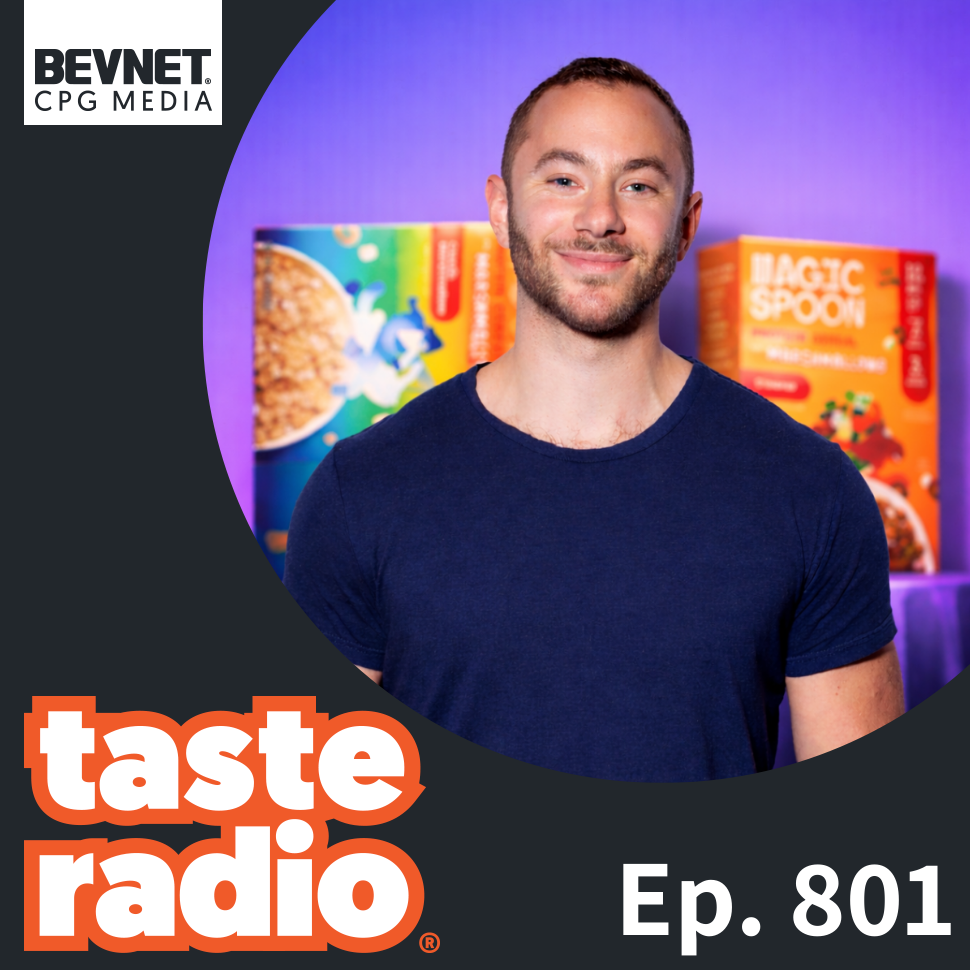
Alright, so Magic Spoon. I think on our podcast, I should probably fully admit that I was always kinda skeptical about the extremely premium I'm gonna use that term, or at least ultra premium cereals. Those that you've seen out there that typically run for $10 or more. And so Magic Spoon is one of the pioneers of this ultra premium cereal subcategory.
But I gotta say. For all my critique or criticism of these brands, I really love these new products that they came out with. They have two new protein cereals that are made with marshmallows. Okay. The reason I like this is because I think this goes back to why we all ate cereal when we were growing up.
It's fun, it's flavorful. It's something that you want to eat in the morning versus something that you have to eat in the morning, right? I think with a lot of modern day cereals, it's like, okay, well if you're gonna eat cereal in the morning, make sure it's really healthy. Make sure it has this, the flavor of.
Added marshmallows, I feel like adds so much more to the, the fun. Mm-hmm. Bringing back the fun in cereal. So obviously you're not gonna go back to eating tricks, right. Lucky charms. Why? Why not? Or, or lucky Charms. Charms. Yeah. So if you're gonna eat better for you cereal, you might as well have the ones that have protein and marshmallows.
So they have, they have a classic marshmallow variety. And they have one that's called s'mores, which I believe is uh, uh, has chocolate os I'm not gonna call them Cheerios. I guess I just did chocolate os mixed with with marshmallows. Magic Spoon also introduced some new protein pastries. What are these typically called?
Mike Poptarts. Poptarts, yeah. Okay. So Poptarts, but they have these new protein pastries. There's 11 grams of protein per pastry, six grams of fiber, and two grams of added sugar. They come in frosted strawberry and cinnamon brown sugar varieties. So I've tried those. Yes, you have? Oh, are they? Are they good?
They're not bad. Um. They're not a Pop-Tart. Mm. Because you're expecting the frosting to be like just covering the top on a Pop-Tart. Mm-hmm. And it full of all kinds of bad stuff and processed blah, blah, blah. I think for me, these are like a step in the right direction. Yeah. The sweetener blend is allulose, erythritol, sugar, Stevia, and monk fruit.
So it's Okay, so it's got like the full pack Yeah. Of sweeteners and it shows. It doesn't really hit you until after you've, you know, swallowed the Pop-Tart and you're waiting for the next bite. But there's still a bit of that. But I think as we get better and better and better at Sugar Alternatives, these are pretty darn good.
Interesting. On the nutrition facts label. It describes total sugars as three grams. Mm-hmm. Including two grams of added sugars, I assume that's the sugar. Sugar. Mm-hmm. The white sugar. But then it also lists sugar, alcohol and it lists 10 grams of sugar alcohol. Mm-hmm. So I wonder if consumers are gonna look at that and try to figure out.
If one you know, is more important than the other, or if neither is important or if they even know what sugar alcohol is. But, uh, all in all, I definitely wanna try these. They look really good. I don't know what the price point is. I would assume it's probably in line with the cereal. It's not saying these are 10 bucks per box, but 10 bucks a box.
For four. For four? Uh, probably three. It could be, it could be. I don't know what it is either, so we shouldn't speculate, but um, I mean, did you see Mike just turn to John Craven right there? Probably shouldn't everybody shut the hell off. Yeah, I went into John Craven mode, but that said, what I do like about this is that it's a pretty easy way to get 11 grams of protein and a snack.
And it felt pretty filling too. It's 170 calories. Nice, nice. Okay. So you feel sated or satiated? Again, like I think my review is kind of mixed, but generally positive on these. That's good. Nice. That's nice. Solid 6.2 more than five. I mean, they can be better than a five and better than a 6.2. Okay. Let's say let's, let's call 'em a seven.
Depends on your mood. Let's call 'em a seven. If Pop Tart's a ten seven for a breakfast pastry or an or nine, Jacqui, is that, is that beer? What are you drinking? No, it's not beer. So tractor sent over their haymakers, that's what they're calling it. So they describe the haymaker as a farmer's tonic, which is made with apple cider vinegar and natural juices.
This one has a. Citrus ginger. It's really tastes really good. But it's interesting, it looks very from the farmer has like the list of ingredients, like it's handwritten on the front with like an apple and a lemon on. It feels very handmade almost, even though tractors are pretty big company. Yeah. Tractor Beverage company, best known for their fountain drinks.
Mm-hmm. You can find them in independent retailers, independent restaurants, and they recently introduced some RTD products as well. That product. Do you remember the, the name that people have typically associated with that type of product? Jacqui. Uh, swill. Swill. Yes. Swill. Mm-hmm. Yeah. So, yeah. Glad they're not using swill.
Yeah, because people have been there, done that, tried that. It doesn't really work. No, nobody knows what switch. Switch. Nobody knows what swill means. So Good. They have their own name, haymaker. Haymaker. Actually, I like haymaker better than switch oil, honestly. So yeah, well done. Tractor beverage company and yeah, really cool cans.
It actually from the tiny screen in our studio here that I can see. Jay. It looks like a Miller genuine draft type product. It's in a gold. It's in a gold can. Yeah, it is in a gold can. And the packaging is very like simplistic. I mean, obviously they don't have a ton of RTDs either, so this is like one of their.
First RTDs. So it'll be interesting to see if this packaging does evolve and if this is just like V one, but definitely gives like a made by the farmer aesthetic. I just Googled switch oil and according to Google's AI switch is also known as Haymakers Punch. Hmm. I never, I, I never knew that. So, okay. Me either.
Wow. Learning something on taste radio of all crazies. Crazy.
Hey folks, it's Ray with Taste Radio right now. I am supremely honored to be sitting down with Lou Cooperhouse, who's the founder and CEO of BlueNalu. Lou, it's great to see you. It's great to be here. Thank you for having me. Yeah, thanks so much for being with us. We're at a naturally San Diego event here in downtown San Diego, and I've been really excited to speak with you because BlueNalu is a company that is doing amazing things in the seafood industry.
But before we get to BlueNalu, you are someone who's been involved in the food and beverage industry for some time. Uh, you're from Jersey. That's right. And, uh, you were a co-founder or the co-founder of the Rutgers Innovation Center. Before you're doing what you're doing right now, how'd you get involved in this business?
Actually, my, my career spans 40 years in the food industry. I was initially at Campbell Soup in New Jersey, later on at ConAgra, then a Nestle funded startup, always doing startups. And towards, uh, to your point, the latter half my career, I decided to kind of help other startups and was a co-founder of a Rutgers University Food Innovation Center based in South Jersey.
And I do a lot of public speaking on food trends myself and candidly, I wasn't necessarily looking to do another startup, but I was actually doing some consulting work for the University of Hawaii to create a food innovation center there. And I was asked to kind of talk about really big ideas that kind of motivated me, what would be really disruptive on our planet.
And literally Hawaii being the center of the Pacific Ocean, where two thirds of our global supply chain of seafood came from. I say, you know what, somebody actually did a proof of concept to making a, a real animal product without the animal back in 2013. What if that was applied to seafood? How about wild capture seafood?
It's inherently variable and volatile in supply and quality and consistency, as well as, uh, having a really lousy yield. So for both consumers from a health perspective. What if we made a product without mercury, plastics, pollutants, any environmental contaminants and consistent every time accessible and at the same price point.
So that was my pitch in 2017, and sure enough, I ran into an investor, and before you knew it, I was starting up another company again back in early 2018. Well, what you're describing as a bee, HAGA big, hairy, audacious goal, it was, um, it still is, but I think some listeners might be saying, okay, so what are you talking about, Lou?
You want. To create a fish company without the mercury, without all the waste, and do it in a really sustainable way, but without the fish. How does that work? It starts off with one fish. So we literally take cells, muscle cells or fat cells from a mother fish, a blue tuna that we caught in the Pacific Ocean.
We actually grow those cells in large volumes, will look like, looks like a fermentation vessel in a brewery. And then we actually form that fish cell product, if you will, which is real natural, genetically identical. Bluefin tuna into our first product, a Saco block of Toro. So it's the highest value seafood product, if you will.
It's the Wagyu beef of the sea that we're making without heads, tails, bones, or skin, a hundred percent yield, just the part we eat. So very sustainable, secure, consistent, et cetera. And we're launching in both sushi and fine dining restaurants here in San Diego in the coming months. So this is imminent.
After seven, eight years of development, we are literally ready to launch here in Southern California. Amazing. So when you are selling this product to restaurants and the restaurants explaining what the sushi is, or at least where it's sourced from, how is it different from what you might say otherwise?
How is it different from quote unquote, the real thing? How do you talk about that? How do you communicate that to consumers and the restaurants that you're selling to? Yeah. In the seafood industry, they have kind of two categories. Today they have wild caught. We're farm raised, right? We are now a thorough category, cell culture to cell cultivated.
We're actually a member of the National Fisheries Institute, so we actually describe it as a cell cultivated product as a alternative to Wilder Farm raised. So we wanna be very transparent in our labeling, but to your question, on a restaurant menu, it might be just called Blue Tuna Toro. It might be branded Blue Nalo product.
Uh, it might be called Sustainable or something different. Mm-hmm. But nonetheless. Those are some of the things that we're gonna learn as we launch in the market. But, uh, we've actually learned from an extraordinary amount of consumer research. In fact, 10,000 consumers and about a hundred food service operators, and the 10,000 consumers are in eight different nations, that the health benefits are the first primary driver for consumers.
Absence of mercury, plastics, pollutants, and for restaurants. What gets them very motivated is the accessibility, a hundred percent yield consistency year round. At the same price point or possibly less than what they're paying for it today. So it's a win-win for both consumers and customers. The hardcore enthusiast might say, well, does it taste like what it's supposed to taste like?
You know, they're probably skeptical about what kind of a texture, what kind of a flavor you're gonna get versus the wild caught tuna. When you talk about them being identical from a biological standpoint, or at least from a Yeah. Genetics, genetic standpoint, does that also relate to the flavor and the texture of the product?
It does. It's a great question. It's the first que, you know, in my career, in the food industry, it's all about delivering deliciousness. Mm-hmm. Culinary is number one. The number one reason people repeat purchases for tastes great without any compromise. So we are driven by culinary excellence. So here's our challenge was that conventional blue Fortuna is highly variable.
As I mentioned in quality, right? We've seen heavily marbled in fatty product, pinkish in color, or brown in color, so it varies dramatically. So we had to literally work with chefs like what is the optimal color, texture, mouth feel? How your insiders versus your molars, you know, kind of have resistance to that.
We've done so much work on Century, we recognize that there's such variability from chef to chef, what they're looking for. They're literally out there pouring tuna in the markets in Japan. Because they're come up with some arbitrary rationale for quality of blue fin tuna. Mm-hmm. But we're actually same.
You don't need to do that any longer. It's always the same. But to answer your question, we work with chefs to actually help design the optimal color texture mouthfeel from the get go. They are part of our PD team is working with our first chefs as we launch launching the market. Okay. Well my last question, Lou, is how can I be one of the first people to taste this product once it gets into a San Diego restaurant or restaurant here in the area?
Do you have a sense of. Where you're gonna be? Is it gonna be a, a pretty small rollout or are you going big and going wide from the get go? Uh, it's a great question. We have not announced the locations, but we've identified them. We're starting three restaurants. We're gonna announce that in the next 30, 45 days, those restaurants will get us, you know, a lot of understanding of the market and conditions and communication strategies and wait staff training.
Uh, then we're gonna launch in a very large way later this year where we'll probably be in over a hundred restaurants by Q3, Q4. So after all this time of development, now we're ready for scale up and then large scale commercialization. So we are literally on the beginning of, uh, commercialization journey, which is, uh, pretty exciting.
It's a new frontier for seafood. Amen. Yeah. Lou, thank you so much for taking the time to join me on Taste radio today. Very exciting stuff. And, uh, please stay in touch. I'd love to hear more about where this company goes from here. Look forward to keeping in touch. Thank you. Thank you.
Hey folks, it's Ray with Taste Radio right now. I am supremely honored to be sitting down with Heather Brown, who's the owner of Sati Soda. Heather, it's great to see you. You too. Thank you. And I've been following this brand for some time. I asked you actually before we hopped on the mics. Have you guys been around for 10 years and you're like, no, no, no.
It's been about five and a half. But it feels like you've been around a bit longer. Talk about the origins of the brand, the development where you are now. Yeah, absolutely. So my husband, David McLaughlin, started with the CBD soda. He basically, in Boulder, there's so many innovative brands and there were a few CBD drinks on the market, but he wanted to make something that people could feel better about drinking and also be organic, which was big for him.
So he basically started SASI with three CBD SKUs and went from there. The CBD space is something that we had a little bit of experience in. My husband was in the wellness. Field as well. So he kind of had experience with that, but this is a whole new thing for us. So it's been a grind, but it's been amazing, especially in Boulder where there's so many innovative brands.
It's kind of the hub for that. So the CBD took off in Colorado as well as in California, and then we expanded from there. I came up with the sugar free monk, fruit sweetened organic energy drinks, which is new this past year, and kind of fills the energy beverage space. Which is growing and growing. And then we also have a line of functional sodas, which include clarity, chill, and energy.
And that's the whole functional beverage space that's growing so much. Yeah, you're in three different categories. You're in functional soda, you're in CB, D soda, and you're in low calorie, low sugar energy. But at the end of the day, the brand, the name of the brand is called SA Soda. And it's interesting, right?
I mean, it's a great time for soda because six years ago soda was a four letter word, not a good one at that. Right. How is, I guess, acceptance of an interest among consumers on a sort of wellness level? How has that impacted. Your development on the market as Southeast Soda, our functional beverages were, and as well as the CBD actually were immediately taken on by Sprouts, which is amazing for a larger chain grocery store because of the demand for people who are actually aware of the benefits of cleaner drinks.
Yep. Cleaner sodas, especially the four letter word and things that after brands such as Poppy and Ollie Pop taking off like they did. There was just a huge attraction to this area and awareness of it that there never was before. That something that's healthy can taste good and make you feel good.
Mm-hmm. Without all the junk. So yeah, I feel like especially with the growth of those drinks in the soda space, it's really helped us grow nationally with distribution and. We're in, I believe, 1,250 stores nationally now. Wow. So obviously there's a lot of acceptance and demand for it. Is it mostly coming from one line or the other?
Or is it mostly coming from CBD, functional? I know the energy line's brand new, but yeah, with the CBD especially because it's so unique, it's a unique space. Although it's limiting, there's only certain states that'll carry it. But where we, they do carry it, it does really well being the only organic CBD drink.
But the. Sugar free energy and the functional soda have actually done really well in King Super City market in Colorado, and those are continuing to grow even though they haven't been out very long. Well, I gotta tell you, just being in business for, and now it's almost six years, you mentioned selling soda.
You would think that's not necessarily the best gross route or at least the best plan, but you guys have made it happen. You guys have made it work. Thank you. If there's one thing. That you could point to as being the most impactful in your development on the market, what would it be? I would say probably going organic.
Okay. It kind of makes us stand out. We're one of the only organic functional lines, one of the only organic energy drinks on the market. Mm-hmm. As well as one of the only organic CBD drinks. And people who, there's a store in California called Jimbo's. Yeah, of course. That literally carries almost all organic.
So the fact that there's things like that that exist and there's such a huge demand for people who are learning about what it takes to go organic. Mm-hmm. And just knowing what you're consuming, non GMO, all that stuff. I think that's the biggest thing that makes us stand out. For sure. Yeah, it totally makes sense, right?
'cause when you think about it, you know, organic is pretty. Prevalent. I mean, you can find organic products all over the place, but not necessarily in the categories that you're in. Yeah, it definitely helps you stand out. So yeah. Heather, really, really great speaking with you. Thank you so much for taking the time.
You too. Let's definitely stay in touch. Yeah, absolutely. Thank you. Thank you.