[00:00:02] Ad Read: This week's episode of Taste Radio is sponsored by Project Nosh. The natural, organic, sustainable, and healthy foods community reads Project Nosh for product, innovation, and investment news. Project Nosh hosts the Nosh Live Conference twice a year in New York City and Los Angeles to gather the community to discuss moving the industry forward while finding partners to make it happen. To know what's happening in the industry, for advertising and lead generation opportunities, and to subscribe to the free daily newsletter, check out the recently redesigned projectnosh.com. And now, Taste Radio. Thanks for listening to BevNET's Taste Radio. I'm Ray Latif, and with me are John Craven, Mike Schneider, Jon Landis, and Carol Ortenburg. We're recording from the Taste Radio studio in Watertown, Mass. Did This week's episode, we continue upon our discussion of plant-based meat in an interview with Ethan Brown, the founder and CEO of Beyond Meat. We're also joined by Dave Sands, who's the co-founder of fast-growing coffee brand Grady's Cold Brew, and who explained what Brooklyn Beer and Tom Brady have to do with his company's development. In the latest edition of Elevator Talk, we chat with Susan Chen, the co-founder and CEO of gluten and grain-free muffin brand Susie's. Just a reminder to our listeners, for questions, comments, ideas for future podcasts, please send us an email to askatastereader.com. Don't forget to review us on iTunes. Count of Cold Brew would be the greatest title ever. The what? I think that's what you wanted to call him, the Count of Cold Brew. The Count of Cold Brew? I like that. That's a good one.
[00:01:36] Dave Sands: It's amazing. One.
[00:01:37] Ad Read: So the Super Bowl. beyond the opportunity to watch oversized men give each other concussions while we celebrate the obesity crisis. It's a chance for advertisers to try and sell you stuff you probably don't need. There was Super Bowl? And we love it.
[00:01:50] Dave Sands: I thought there was a halftime show with some like football around it.
[00:01:55] Ad Read: Are we allowed to Super Bowl? Yeah. You mean the big game? Yeah, I think everyone has, maybe that's his TV. Yeah. Okay, cool. Or marketing things. New Beverage. I guess that's what this is. What are we talking about? We just talked about whether we can Super Bowl or not, but I think we can. So we're going to Super Bowl as many times as we can. Superbowl, Superbowl, Superbowl. Superbowl, Arsenal. Oh, sorry. The commercials are the best part of Super Bowl. Am I right? I like the commercials in Super Bowl too, Ray. So, you know, hits, misses from some of the food New Beverage companies at Super Bowl. Landis, what'd you think? I mean, anytime I see Terry and Lannister spitting buster rhymes, I mean, how can you not enjoy that? That was so much fun. Three does Mountain Dew big winners. Yeah, absolutely. They were big winners. I think that a lot of the winners in my book were the ones that stayed light. You know, tide was my favorite by far. Yeah, that was the best because they made every ad into Ads Tide ad. Every ad And after you saw the first one, you thought it was going to be Ads Tide ad, especially after you saw the Old Spice... Oh, not an Old Spice ad. I'm in Ads Tide ad. And the amazing thing is, you know, it's the... You can eat Tide, right? So this is... This is the second time you've brought up Tide pods. No, no, no, no, Ray, Ray, don't Did This. You can eat Tide pods. Right, John Craven? That's bad. We talked about this, right? Tide pods are bad. Okay. I thought that the brands that, you know, went for the social commentary largely missed the Mark. In my opinion, like which ones I didn't really, I was not a fan of the Dodge commercial. I wasn't a fan of the Coke and the stellar twa stuff. Like, you know, I think donating is great for a second because Did Coke lose on that ad? Because everybody's talking about it. I mean, the Diet Coke ad, it was, it was weird. Probably not, but also they make life and happiness part of their brand. So they actually do tie in a little bit to what the social commentary is when you're just trying to sell trucks with Martin Luther King's voice. That doesn't resonate with me. Dodge is American.
[00:03:58] Cold Brew: I mean, regardless. No,
[00:04:02] Ad Read: Yeah, I mean, I'm not their target consumer anyways. You're not the target. Americans are the target. Martin Luther King's an American. Somebody at some boardroom somewhere at an agency made that connection and said, we should use Martin Luther King. I guarantee that's what happened. I'm not an ex-agency guy or anything, so I don't know exactly, but I'm pretty sure that's where that creative idea came from. There were some commercials that didn't end up in the actual Super Bowl, Super Bowl. but there were hits on the internet, right? You know, you might think you have to spend a lot of money to make a big splash during Super Bowl. And, you know, I think a lot of the brands that listen to our show don't have those giant budgets. So are there ways for them to get involved?
[00:04:39] Dave Sands: Yeah, there's certainly ways you can be involved. Not a whole lot of natural food brands buying ads during Super Bowl, except maybe, I think I saw some avocado commercials. Avocados from Mexico. Yeah, there we go.
[00:04:51] Ad Read: That was a great ad.
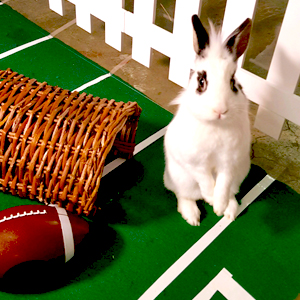
[00:04:53] Dave Sands: clearly effective, but there's folks like General Mills, which had the Annie's Bunny Bowl in the spirit of the puppy bowl. And this year they had close to 400,000 views of that Bunny Bowl. I mean, who doesn't want to watch bunnies frolic?
[00:05:12] Ad Read: I'm into it. I just look out my window though. They're all over Watertown.
[00:05:15] Dave Sands: Mike, you don't want to watch bunnies? Frolic, he just raised his hand. What kind of monster are you?
[00:05:20] Ad Read: My kid definitely will watch the Bunny Bowl. She's all about the bunnies.
[00:05:24] Dave Sands: They also got lots of engagement through social media, likes, shares, people tweeting with hashtags, and that was great. It did so well last year that this year they decided to also extend it to acquired brand Epic and have the Bison Bowl. which is truly something to behold. I recommend everyone go check out the epic Bison Bowl. Was it epic? It was epic. It was really just like a bunch of kind of like sleepy looking bison a little bit.
[00:05:57] Ad Read: Nobody told him the rules of the game. It's like watching an Arsenal game, right? I don't even know what that means.
[00:06:06] Cold Brew: I'm more of a Tottenham guy. Is that a place?
[00:06:12] Dave Sands: Sam, pay attention to you guys.
[00:06:14] Ad Read: Oh, geez, my heart. Sorry for that.
[00:06:18] Dave Sands: Slightly less engagement this year. I'm sure it'll be really popular next year. However, my big question is at the end, they put all the bunnies up for adoption and they're always all adopted. Can I adopt a bison? Did This like, can we have the BevNET bison?
[00:06:32] Ad Read: If we do, can we eat it, please? No, they're so cute. Do you have a spare bedroom for your adopted bison? You can ride it to work. It'll be so delicious. What about Moon Pie? They did something interesting.
[00:06:42] Dave Sands: They did, like many companies, they didn't have a budget for... No, no, they had a budget, they just couldn't get a slot, right?
[00:06:49] Ad Read: I mean, they... Totally, totally. I think what happened was they made a bunch of their own ads, it just didn't get aired, so they published the scripts to the internet and, oh, we happen to have one here through the power of the World Wide Web. We opened a space station hovering above what is likely the Earth. There's a really hot social media manager that is trying to do some tweeting.
[00:07:09] Dave Sands: Man, I'm hungry.
[00:07:11] Ad Read: An astronaut floats in. Have you heard of MoonPies?
[00:07:15] Dave Sands: Yes. Actually, I run the Twitter account.
[00:07:19] Ad Read: Sweet. You sell MoonPies?
[00:07:22] Dave Sands: Sort of. I talk with people online in hopes that my engagement might lead some of them to purchase MoonPies. But I'll never truly know.
[00:07:31] Ad Read: Sounds important.
[00:07:33] Dave Sands: Are you just saying that?
[00:07:35] Ad Read: We cut back to the astronaut, but he's already out in space doing something important. Our logo fades in. Moon Pie. Moon Pie. So there's a bunch of these out there. That was weird. It's weird, but we read it, and people read these things, and they're laughing, they're talking about it. They spent no money on this. I mean, they spent the money of... some copywriter making a few scripts, putting it on the internet, and you know, some money, but it's not the same amount of money Ads Tide spent for sure, but still people are talking about it.
[00:08:03] Dave Sands: What was interesting was they said they recognize that Twitter traffic and social media traffic surges during big events as people are engaged with these mediums. So they figured by releasing these scripts onto Twitter, when people were already on that medium, they could capitalize on that conversation going on and use that to increase their retweets and their engagements.
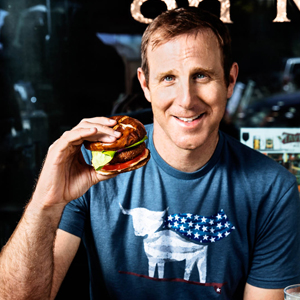
[00:08:23] Ad Read: I give them an A plus for that. I mean, this is brilliant. You know who else I give an A plus to is Wendy's though. Oh man, I love their commercial just straight up bashing McDonald's during Super Bowl. They took them right down. It just went right for the jugular and it brought me back to a simpler time where our problems were so small that, you know, we were outraged when one fast food company bashed another one during Super Bowl and that would ignite fire and fury. And now, now we, you know, I don't even think anyone's really talking about it. Do you go to Wendy's though? I love Wendy's. See, there you go. Slightly biased. It's just all the things he likes. That was impressive. Well done. Well done. I was waiting over here for that. I will admit Wendy's does make a tasty burger. Will they ever start offering a plant-based variety all of what Wahlburgers is doing with the Impossible Burger? And a few episodes ago, we actually spoke with Pat Brown, who is the founder and CEO of Impossible Foods, which makes that Impossible Burger. Last week, we heard from Josh Tetrick, whose company just is developing lab-grown meat. And this week, we'll hear from Ethan Brown, who is the founder and CEO of Beyond Meat, which makes plant-based meat products, including a groundbreaking vegan burger. We caught up with him with the 2018 Winter Fancy Food Show in San Francisco, where he discussed the company's mission, business strategy, and why he's focused on distribution in the heartland.
[00:09:47] Dave Sands: Carol here, and I am at the Winter Fancy Food Show. I'm joined by Ethan Brown, who is the founder and CEO of Beyond Meat. Ethan, thanks so much for being with us today.
[00:09:58] Brooklyn Beer: Thank You Over having me. It's an honor to be here.
[00:10:00] Dave Sands: So tell our listeners, what is Beyond Meat?
[00:10:03] Brooklyn Beer: Sure. So we started the company in 2009 with a very simple premise, which was challenging the notion that you needed an animal to produce a piece of meat. And it really starts with how you view things. And, you know, the traditional way of thinking about meat is it comes from a chicken, cow, or pig. But we want to take a step back and say, okay, what's the composition of meat, right? And can you start to think about meat in terms of its composition? And meat is really, it's not very complicated. It's essentially amino acids, it's lipids, it's a very small, almost none, amount of carbohydrates, it's trace minerals, and then it's predominantly water. So all of those things can be found outside the animal, in abundance actually. And so what the animal's doing is taking a lot of plant matter, and they're organizing it to the digestive tract and their muscular and skeletal system to produce muscle or meat. And what we're doing is essentially taking those core parts of meat directly from plants and we're assembling against the very well-known and well-understood architecture of meat. You can learn about how meat is assembled in a textbook, for example, from a meat science department. It'll show you the distribution of fat and water and protein. Or you can do what we do, which is put our products under imaging, and then put a piece of meat under imaging, and we compare the differences. And so someday, you'll be able to have a piece of meat that's composed of all plant material, but it'll feel, and to you, the consumer, will behave exactly the same as animal protein.
[00:11:27] Dave Sands: I mean, this sounds very scientific, but that's not how you talk about it to consumers.
[00:11:32] Brooklyn Beer: No, it's not, because it's really interesting. I mean, at the end of the day, it's a tale of two processes. You can take a lot of plant matter, energy, and water, and run them through an animal, and produce a piece of meat. Or you can take those inputs directly from the plant itself, and you can run them through our process, which is pretty simple at the end of the day. It's heating, cooling, and pressure. So if you've had pasta, for example, you've had something run through a similar process. Now, what we do is quite different, but we use the same basic elements of heating, cooling, and pressure to restitch the protein so it forms into a muscular-like structure.
[00:12:05] Dave Sands: One of the things that's interesting about Beyond Meat is you're not necessarily going after the vegan, vegetarian consumer. How did you decide, you know, we want to go after meat?
[00:12:16] Brooklyn Beer: Right. I mean, there's a lot of reasons to do that, impact, et cetera, but I mean, just more foundationally, You know, I believe that meat tastes great. I believe that meat plays a huge role in our culture and our heritage and our history. You know, we began consuming meat even before we became homo sapiens. And it's in fact, one of the things that led us to the bodies that we have today and the brains we have today. I've talked about this before a lot, but I think it's important to understand that, you know, when we were more of a vegetarian diet as chimpanzees, There was a transition that started to occur where we began to consume increasing amounts of meat, first as scavengers, and then became hunters. And with that transition to a more nutrient-dense source of food, our brains grew dramatically because our stomachs could shrink, because we were using less energy to process all the plant matter. That freed up all this energy for our brain and our brains grew from 600 cubic centimeters to 1300 cubic centimeters. So the notion that we can just sort of overnight eliminate meat and everyone have a salad isn't one that I ascribe to. What I do believe though is that we can transition from an animal-based meat to a plant-based meat and continue to enjoy all the benefits of meat with none of the downside. And so if you think about it that way, Then you say, OK, well, this is for everybody, because it's not for people who don't like meat. It's for people, in fact, who do like meat. But maybe you're thinking there's a reason, whether it's human health and all the issues about heart disease, diabetes and cancer, whether it's climate change. We look at the number one driver for greenhouse gas emissions. It's not your automobile. It's not the light in your house, but it's the food at the center of your plate. And so if we can transition people from an animal protein to a plant-based protein, we're all going to benefit. Then you go to natural resources, animal welfare. There's many reasons to Did This, but it's really about providing the consumer with something they're going to enjoy and they're going to love. I look a lot at what you're holding in your hand, the cell phone. The landline, right, we said we can do something better than the landline. And we didn't have to rail against the landline. We didn't have to, you know, wax politically about it. We could just say, you know what, I'm going to produce something that's better. And so if you look at the history of innovation, that's what you need to do. And we're trying to get consumers something that's better than animal protein, that provides all the benefits but without the downside.
[00:14:27] Dave Sands: In order to capture that consumer, Beyond Meat has done something really interesting and is positioning its product as being sold in the meat department. Not in the alternative protein set with tofu, but right alongside hamburgers and chicken. How did you get retail buy-in? on that. I mean, that seems like a pretty tight category to get into.
[00:14:49] Brooklyn Beer: Right. So I think the first thing is that it took us a long time. So we asked Whole Foods to do that back in 2011 and 2012, and they said no. And they were right to say no, our products weren't good enough yet. And so we did in my view, get relegated to the meat alternative case, which is not an area I want to be in. But we took our lumps and went back to the lab and grew dramatically in terms of the amount of research we do and started to bring in scientists from all different disciplines and said, okay, let's be the group of people on earth that understand meat better than anybody else. And I mean better than anybody else. And then let's go about rebuilding it. And that's what we do. And we have, you know, a very large scientific team now, great group of both fundamental sciences, engineers, food sciences, et cetera. And we said, we got to make this better. And so year after year, we've gotten better and better. And I think, you know, with this Beyond Burger, we've gotten to the point where it is worthy of being in the meat case. And so we went back to Whole Foods and said, will you consider? And it's a funny story. We had a great meeting in Los Angeles with a bunch of meat buyers from Whole Foods. It was like 11 or 12 sitting around the table, and they loved the product. We were like, oh, fantastic. We're going to the meat case. Awesome. Well, someone at the higher level there said, you know what? This doesn't belong in the meat case. It needs to go back in the meat alternative case. So we're like really upset by that. But then a guy named Tom Rich in the Rocky Mountain region, he's a VP out there at Whole Foods, raised his hand and said, I'll do it for you. So he did it, and we sold out in an hour in his store. So the consumer was ready for it, and they're ready for it and more ready for it every day. I talk about this a lot where it's a latent demand. People want this to work. And now it's up to us, and we have an obligation to make the products good enough so that they're indistinguishable, so that people can make the transitions they really do want to make.
[00:16:24] Dave Sands: What's that like as a CEO and founder to have to say, you know what, we tried really hard, but we can do better? Because that's a hard conversation to have with yourself, I would imagine, as an entrepreneur.
[00:16:37] Brooklyn Beer: Yeah. No, I mean, I think it starts with humility. I mean, we have the best and brightest scientists in the world working on this, I believe. But I'm often quick to remind them that they're not the smartest person in the room. I mean, everybody brings a different talent to work. And some people are great at some things and others at others. And you have to be respectful of that and not get ahead of yourself and not believe your own hype. I love that process of continually getting better. I think it's what life's about. I think it's what growth is about. I'm very fortunate to have kids. And I work with them every day on getting better at whatever their craft is. And that's the way I feel at work. And so if you come and sit in my office, you'll see I have a lot of posters in my office that are negative sayings about our products. And I use those to motivate myself. And, you know, I'm making one now that we had a review from somebody that wasn't good. And so I'm going to put that up on our wall. You got to remember that meat, we've been consuming it for over 2 million years, but it's been something that's been under, you know, evolving for, you know, many, many, many millions of years. We've been at this for nine. It would be hubris to think we can get it done right away, but we will get it done.
[00:17:34] Dave Sands: And I'll be honest, those products were still delicious. They were heads and tails above a lot of the other meat alternatives. And I remember when they hit the market and I was just like, wow, this is, this is so easy to incorporate into my meals.
[00:17:48] Brooklyn Beer: Yeah, that's really what we want. We want to make it seamless for people and we want mom to be really comfortable with them. That's a big thing for us. And one of the reasons we use so many athletes do our marketing. is we want to arm mom with the tools at home to get the rest of the family on board. And I just love what's happening in the sports world today. Like, you've got a guy like Kyrie Irving, who's one of the top NBA guards. In his Nike commercial, he's talking about going plant-based. Like, when I saw that, I couldn't believe it. You know, and you see all these guys doing it because the inflammation issues and all the benefits of clean protein are becoming apparent to them. And so when I was growing up, you know, it was really about Got Milk and the Got Milk campaign and all this. And today it's about, you know, let's do something that's better for our bodies with plant protein. And that's what we're seeing. And I think it's fueling the growth of my business.
[00:18:32] Dave Sands: How does working with sports celebrities, though, speak to mom?
[00:18:37] Brooklyn Beer: So, because she needs something around the table to get people excited. So, I've been approached. I don't know, hundreds of times, and I've argued with marketing experts, literally, been very, very deep discussions with them about why I don't want to use nutritionists to sell my product. Because this is something that's deeper than... the frontal lobe. This is a, you know, the part of our brain that craves meat is a very, very old part of our brain. You know, it's a reptilian basically, right? We need to think about meat differently than we do selling something else, right? And so I don't want to preach or prescribe things, right? I want to excite people. I'm not interested in going on various talk shows and, you know, telling people that they need to eat this or they're going to die of cancer. Like, that doesn't excite me. I want people to feel great after they eat my products. I want them to be excited about it, right? And so I don't think speaking to people in a way that's preachy or that is the standard way that these foods are sold is the right way to do it. I think you got to excite people. You know, talk about meaningless Mondays. I love that campaign because I think they're doing something good for the world, but it's not the strategy I'm taking, and so I don't participate in the Meatless Monday campaign because I don't want people to think they have to go a day and sacrifice and have my product, and then they can get back to the good stuff on Tuesday. That's not how you build a business, right? I want to build a business where people want this every single day, and they crave it, and that's what I'm after.
[00:19:58] Dave Sands: I do want to delve into one thing that I know we've spoken about in the past, which is price. You know, it is still premium price point right now. And I know from our conversations, that is not the goal long term. How do you address price? How do you think about that?
[00:20:14] Brooklyn Beer: It's just the beginning of our industry. You know, if you go to any standard operations class at a business school, they'll talk to you about eliminating the bottleneck in production. And that's the part of the production chain that's the slowest and most inefficient. And so for us, it's an obvious point, that's the animal, right? And so if we've eliminated this bottleneck, why aren't our prices much, much lower than animal protein? You would think they would be. We're taking protein directly from plants. They have to run all of those plants through an animal. It's a prehistoric mechanism, but yet we're still more expensive. It's curious, right? And the reason is that the industry is just nascent, right? I mean, some of the ingredients we use, for example, pea protein is a popular protein in the market, right? There's nothing special about peas, right? It's that peas were scaled up for starch. And there's a derivative protein stream, right? So businesses have emerged where they're now using pea protein and selling it into our markets. What's really neat is more and more suppliers are coming online and the prices of peas are dropping. Pre-protein is dropping, right? You'll see that, right? And then you'll see fava beans coming online. You'll see chickpea and protein coming online. You'll see sunflower seed protein coming online. So the future is bright in that regard as more and more suppliers and farmers say, you know what? I don't need to devote my fields to feed crops for animals. I can devote my fields to protein sources for human consumption. And if you're a farmer, you know, you don't have to have any business education to understand You're going to make more money selling product that goes into the mouth of a human consumer than goes into the mouth of an animal. It's just the way that markets work, right? And so that's what we're trying to encourage people to do. As that happens, our prices will drop and we will enterprise meat. It's just a question of time.
[00:21:51] Dave Sands: How do you convey that to the consumer now, though, that, you know, they should make this investment? and put it in their cart. You mentioned you don't want eating a Beyond Meat Burger to be a sacrifice. But for some consumers, they do have to sacrifice and choose between purchasing this and purchasing something else.
[00:22:07] Brooklyn Beer: Right. Yeah. I mean, first of all, we do keep our prices. I mean, they're not So if you look at some of the, like, prepared grilled chicken, for example, the strips, we're pretty competitive with those prices. Now, our burgers are more expensive, but, you know, we're all, I'm drinking Starbucks coffee right now. I mean, it's, you know, there's an amazing tendency if humans want something, right? I mean, college kids, you see all the statistics about how much they spend. I don't want that for our business, right? I don't want people to be spending too much for our products. I want to drop. I mean, I'm all, this is all about impact for me. Like, if I could give the product away, I would. But it's just taking time. It just takes a little time.
[00:22:43] Dave Sands: I want to switch gears a little bit and talk about the food tech side of the industry. I think something that you referenced from the beginning, you know, this is a highly technical company. You have amazing scientists on board, but you're not positioning yourself as a food tech company to consumers or how you talk about things. And a lot of food brands right now are trying to position themselves as a tech company. You know, why make that choice? Like, is the consumer just not interested?
[00:23:11] Brooklyn Beer: No, it's funny. It's a great question. I was with two good friends of mine last week in Chicago, Don and Liz Thompson. And Don was the former CEO of McDonald's. And he's a board member of mine. And his wife and I have had a great relationship over the years. And I was talking to Liz Thompson about this. And I was going on about innovation. And she said something that I've repeated often. which is innovation is good for my iPhone, but I don't want to put it in my mouth. And I mean, I think it captures it all, right? Is, you know, you can use technology to forge great solutions, but the celebration is in the solution, not in the technology, right? People enjoy their cell phones. They don't necessarily geek out on how they're made. And I think for us, it's important to focus on using all natural ingredients, keeping it as simple as possible. You know, so we have a competitor, right? And our competitor is taking a different approach than us. We use beet juice to provide color for our burgers, right? That's important to me because I think it conveys what kind of company you are in terms of, you know, we're going to be with you on this journey. We're going to use ingredients that are familiar to you.
[00:24:13] Dave Sands: For some of these food tech companies, they do really well in certain markets, but they may struggle when they try to get out of those urban markets. Do you think your strategy has helped you succeed in, you know, the South, the Midwest, other parts of the country where you're not in California, surrounded by sort of somewhat of a bubble? Yeah.
[00:24:31] Brooklyn Beer: No, I think it's really important. I mean, I think it speaks to where we started the company. We started back in the Mid-Atlantic region. When I moved to California, I think I made the most expensive move in America. I was living literally in Appalachia and moved to Los Angeles. It was like shocking. I was like, you can get what for what? So a lot of the early demos we had to do were in Pennsylvania, in Maryland, in Kentucky, Ohio. And, you know, you learn what consumers are looking for there. And, you know, that made a bunch of different impressions on me. But the thing that really stood out for me was women in particular come up to me and say, I can get my husband to eat this. And he needs to because of X, Y, and Z. Right. And so we've never been about, you know, Marin County and Martha's Vineyard. We've been about what people in mainstream America want to eat and helping them and their families be healthier. It's really important to me. So an interesting statistic came to You Over the 4th of July weekend. One of our highest performing stores, I think the highest performing store for that weekend was in Omaha, Nebraska. So I think Warren Buffett went out and got our burgers. I'm just kidding. But somebody there was obviously motivated to clear out the stores. And so I think this issue of being healthier for your family and for yourself, and particularly if you're facing some kind of disease, maybe heart disease, et cetera, which is one of the major killers in the United States, you make these choices and you make them with increasing frequency. And so I think we're seeing that it's cutting across, you know, geographic, racial or economic boundaries that have existed in other food types.
[00:26:00] Dave Sands: One thing you do have in common with some of these food tech companies is you've been highly successful in raising capital for the business. Some folks that I've talked to at the show have said that companies like yourself are what's driving up the valuation across the CPG market. and resulting in just investors who had never invested in food before wanting to get into Food Show. And I think whether or not that's a good thing or a bad thing is kind of up for discussion right now. How do you kind of think about that?
[00:26:32] Brooklyn Beer: I think it's an interesting thing that's happened. I mean, we were the first company that I know of that Silicon Valley invested in. That was really due to a guy named Ray Lane and someone else named Amol Desponde. And Ray is an enormously important figure to me. He's the senior most guy on my board. He was the president and I think COO of Oracle, so came out of the valley. But that was in 2011. And since then, a lot of other investments have occurred. And it's just a different animal, like it's, you know, food does not scale the way technology does. And so it requires enormous potential, such enormous patience, rather, on the side of the investor. And disrupting the food industry is an entirely different proposition than in disrupting the technology sector. We have a really intimate relationship with food. We have, you know, cultural norms that we follow around food, religious, right? Deeply ingrained views on what drives health and what doesn't. And so it's very different from getting someone, as much as I like the analogy of trading out the cell phone, trading out the landline for the cell phone, it's stickier than that, right? Consumers have really, really fixed ideas about food. And so it takes a lot of education, a lot of patience to scale Did This business.
[00:27:42] Dave Sands: How do you set expectations with those investors, though, that, like, look, I know this is what you've seen from a tech company. It's going to be different here.
[00:27:52] Brooklyn Beer: Some don't get it, you know, and those you need to just sort of make sure you're careful around them. But I've been very fortunate to have a group of investors that, to a single person, get it. And I think that, in part, Kleiner Perkins was the first group to invest and they've helped guide the process for me and helped bring on the right group of investors. And so I've just been very blessed in that regard.
[00:28:13] Dave Sands: Also going on in the Valley Did This idea of clean meat and growing meat from cells that biologically resembles meat. Is that something you guys have thought about? Did you think about that when you started the company?
[00:28:26] Brooklyn Beer: I did. I looked at that in like 2005, 2006. And there's a guy named Jason Matheny who was really kind and guiding me in that. And he's a real sort of founding figure in that field. And I had good conversations with him and with scientists who were working on it. And I come out of the fuel cell business. And fuel cells are a terrific and very elegant solution to climate change in terms of transportation. You can drink the water that comes out of a fuel cell car or the tailpipe because it's so clean, but we're not driving them. And so I didn't want to get involved in another project that I couldn't see the horizon, you know, that I didn't have any idea when it was going to commercialize. So I do think that clean meat is a, or in vitro meat rather, and lab grown meat, I think is an elegant solution, but I have concerns about how quickly it can scale and then secondary concerns around consumer acceptance. But I will tell you something that You know, I follow closely what Uma is doing at Memphis Meats, and I think if someone can do it, he probably can do it. So I'm cheering for him. It's an interesting approach.
[00:29:25] Dave Sands: Is there room for both solutions in the marketplace?
[00:29:27] Brooklyn Beer: Yeah, of course. Yeah. No, I think there is. And the consumer, look, the consumer is leading the whole thing. Like, you know, we're very fortunate to be part of a big consumer trend here toward plant-based meat. And, you know, if it ends up, they're open to also to in vitro meat, you'll see that. But I think that story needs to be told, and we don't know yet.
[00:29:46] Dave Sands: Speaking of consumers driving the trend, one thing that is really interesting about Beyond Meat is that you guys took investment from Tyson Foods. Some people would say, I'm a plant-based food company, I'm never taking money from Big Meat. What drew you to Tyson? How did that relationship come about?
[00:30:04] Brooklyn Beer: Right. We heard a lot of that when we took the initial investment and we knew that was coming and it's okay. So we first started talking with Tyson executives in 2012, in fact, when it was still Hillshire and Tyson had not yet acquired Hillshire. And many of the executives came along and entered Tyson as that merger occurred. or acquisition occurred. And so it's been a really long discussion. And, you know, I think that we're both after the same thing, which is how do you sustainably feed the world? Modern agriculture, you know, the origins can be traced back to, I don't know, 10,000, 13,000 years ago, depending on which source you're looking at. And there are about 5 million people when we started to domesticate animals, right? Globally, today there's 7 billion people and we're still providing protein in the same way. It's not a good idea. It's not sustainable. So we have to think differently. And I think both Tyson and myself can agree on that. And we focus on that solution and kind of block out everything else. I mean, that's really how we operate. I spent a lot of time with them and it's been a good relationship thus far.
[00:31:01] Dave Sands: How do you explain that to consumers, though, while you're catering to the wider range of consumers, meat eaters and vegetarians? I'm sure there were some vegetarians, vegans who were, you know, expressed feedback.
[00:31:12] Brooklyn Beer: Yeah, we got a lot of hate mail. We got a lot of hate mail. I've never been interested in wearing a black turtleneck and pontificating in a coffee shop about how to change the world. You know, it's just not my style. I think that working with Tyson is the right thing to do. There are ways that we could find plenty of things to disagree with, you know, and on, and there certainly are big areas we don't agree on, but there's a lot of areas where we can forge a solution together, and that's the most important thing to do.
[00:31:39] Dave Sands: Well, we'll look forward to seeing you there, and thanks so much for joining us today.
[00:31:45] Ad Read: Frenemies, everyone likes that word frenemies, especially when it comes to building a category. And it's not just Impossible Foods. It's not just just formerly known as Hampton Creek. It's not just Beyond Meat. They're all working together to build this category of plant-based burgers, chicken, fish, et cetera. And it's cool to see them all having an impact on this category. Yeah, it reminds me a lot of the kombucha category where you've got a bunch of brands out there that are, are they taking on each other or are they taking on soda? I mean, what's interesting with this is that you have a bunch of different companies that are kind of after the same goal, but their approach to getting there is vastly different, right? So much different, but yet the results are all quite delicious in their own right. And they're all very meat-like or are they meat? Is it meat-like or are they meat? Is it vegan meat? What's going on here?
[00:32:36] Dave Sands: Well, and Beyond Meat, will consumers really get into the nuances and the nitty gritty of what's different between these companies? Are they going to say, hey, I can eat a burger or I can eat something that looks like a burger, but it's not a burger.
[00:32:51] Ad Read: Well, I think it really does come down to distribution and who can be fastest to market with some of this stuff. I mean, I think that's what Ethan Brown was talking about when he said, you know, we've never been about Marin County or Martha's Vineyard. We've been about what people in mainstream America wanna eat and helping them and their families be healthier. It's really important to me. And, you know, with some of the stuff, if you can get it as close to the real thing as possible and you can get distribution as fast as you can, which it sounds like Beyond Meat is trying to do, my guess is you'll have a leg up on the competition.
[00:33:19] Dave Sands: I think it depends on your strategy and goal as a company. As we heard from Impossible, their strategy is to go after consumers in restaurants, and that's where they attacked first. Beyond Meat went after the grocery store first. Now they're both getting closer to similar distribution strategies. But you're right, you can't find out that a product's delicious and awesome and a great substitute for a burger if you can't buy it in your local grocery store.
[00:33:43] Ad Read: And you have to get to the heart of the matter with some of this stuff, which is about keeping it simple and all natural ingredients. Ethan talked about brands being a little too enamored with themselves when it comes to technology and innovation. He said, you can use technology to forge great solutions, but the celebration is in the solution, not in the technology. You know, people don't geek out on their cell phones. They love their cell phones. They just don't necessarily, well, most people don't. John Craven, you kind of geek out on your cell phones from time to time, no? Is that it right now? No, never.
[00:34:10] Dave Sands: He's never camped out.
[00:34:11] Ad Read: Do we even call it a cell phone anymore, Ray? A mobile device? I know you got a flip phone over there. My Zack Morris 5000. The other thing I thought was really cool about this interview is how Ethan, despite all the glowing praise for what they're doing, wasn't willing to get too enamored with his business and himself. He has big posters in his office of negative comments about Beyond Meat and knows that they have to get better and better for them to actually reach all those people in mainstream America that he wants to.
[00:34:40] Dave Sands: And that definitely ties into the concept of, you know, emphasizing the technology. Mainstream consumers just want to eat something that tastes good. For a lot of consumers, that means something that's better for them as well or more sustainable for the earth. But when it comes down to it, the key thing is that it tastes good. For many consumers, they don't care exactly how it was made and all the science that went into it. It's about making dinner, not making the product.
[00:35:07] Ad Read: And if you like pull back and look at this from a longer term perspective, it's about price as well. And if you're able to make a more nutritionally dense, more beneficial, better tasting product for the same price as it, you know, your bargain meat out there, then you have really viable. The price thing is the only way you're going to get the red blooded carnivore, so to speak, to bite down on these burgers, because That person doesn't care that it's an animal. They don't care. They like burgers the way that they are. They like meat the way that it is. So until it gets to a price point that makes sense for them, they're not going to substitute these kind of meats, any of these kind of meats for the real thing.
[00:35:46] Dave Sands: And that was one of the most interesting... The real thing.
[00:35:48] Ad Read: I'm doing air quotes. Air quotes.
[00:35:50] Dave Sands: That was one of the most interesting things about the interview was where Ethan said that he didn't necessarily align the company with the Meatless Monday movement because that means sacrifice and that means you know, okay, one day a week, I'll give up my meat for something that's inferior. And his point is to get to a place where it tastes so good that the red-blooded carnivore like has no choice to make.
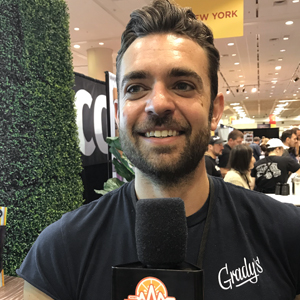
[00:36:13] Ad Read: Well, the interesting thing I saw at Expo West, and I've mentioned this on the show before, is that there was a vegan at their booth at Expo West and the meat sizzling, and she just wouldn't eat it on principle because it looked, smelled so much like burgers. And she heard everybody saying, this tastes just like a burger. And it does, it's delicious. Well, I mean, that's certainly the bigger opportunity, right? It's the people who aren't vegan, the people who are carnivores and omnivores, if you want to call them that as well. And the bigger opportunity, it's the bigger opportunity that you're always looking for. In particular, in coffee, Cold Brew wasn't necessarily, Cold Brew was a niche for a long time. At this point, it's a pretty mature segment within the category. One guy who knows a lot about the Cold Brew segment is Dave Sands. He's the co-founder of Great East Cold Brew and, appropriately, a chill dude. He and co-founder Grady Laird launched the company in New York City in 2011 and have since grown it into a multi-pronged coffee platform that includes bottled concentrates, bean bags, and most recently, a ready-to-drink product. In a conversation recorded at the 2018 Winter Fancy Food Show, I spoke with Dave about the development of Grady's, including important lessons learned over the years, and influential people that have guided his journey as an entrepreneur. All right, we're at the Grady's Cold Brew booth at the Winter Fancy Food Show 2018 here in San Francisco, California. I'm with Dave Sands, who's one of the co-founders of Grady's. Dave, thanks so much for being with me.
[00:37:36] Tom Brady: Ray, it's always a pleasure. Indeed it is. Welcome to our booth. I know this is bad radio, but for people who are listening, you can't see it, but we're standing in a booth that looks like a backyard barbecue this year.
[00:37:47] Ad Read: I love it. You got some grass, you got some bushes back here. It's all sort of real. We've got a lawn chair and a putter and a golf ball. You got a Yeti container there, keeping everything cold? What else are you keeping in there? Ice. Oh, just ice. I was hoping it was some whiskey.
[00:38:03] Tom Brady: Yeah, it looks bigger than it is on the outside. But yeah, star full ice because we need to make a lot of samples of Cold Brew.
[00:38:09] Ad Read: Yeah, for sure. So I've known you guys for some time. You know, you were introduced to BevNET, I think, in 2013, when you came to BevNET Live, won the New Beverage Showdown competition that we had at the event. And you've had a pretty good run since 2011, when you launched the company. You've been in business seven years. There's not a lot of companies in New Beverage industry that make it seven years. And you've had some success, for sure, with a variety of your products. And now you're trying to go from your home and your roots in New York to the West Coast. You've moved recently to LA. What's that been like?
[00:38:40] Tom Brady: Sunny Southern California.
[00:38:41] Ad Read: Yeah.
[00:38:41] Tom Brady: Very cool. Yeah. I lived in Brooklyn Beer 11 years and we started Grady's in 2011. Yeah. I mean, we won the big check and had to bring that thing home on the L train and those are the kind of crazy things that you end up doing when you live in New York. You know, I mean, it was kind of like a 50-50 life choice and business choice. We needed someone running the West Coast. And I grew up in Boston and moved to New York after college. So I figured it was time to check it out. And honestly, I don't ski. I don't snowboard. I just deal with the cold. So I'd rather just like be surfing or something like that.
[00:39:13] Ad Read: Well done. Well done. It sounds like you've had some patience in your business plan. You know, you stayed in the Northeast, you stayed in the New York area for quite some time and now you're finally deciding to break out into the West Coast. And I'd love to pick your brain about your approach to business and your approach to entrepreneurship. From a sort of general perspective, I wanted to chat with you about lessons learned Did This business and we'll do a top three. You know, what are the three most important lessons you've learned as an entrepreneur, particularly as it relates to this business?
[00:39:46] Tom Brady: Yeah, I mean, You know, I think that one of the things that helped is before we started Grady's, I had, you know, like a cubicle job at like a big kind of monolithic fortune, you know, 100 company. And so... You know, I mean, it was an easy for me job. But so when you look at, you know, the life cycle of Great East and the fact that we've been doing this for six years, I've kind of seen the other side of it. And so, like, I just know that the suit cubicle life wasn't really for me. And so when we started this, we knew it was going to be a long haul. But we also, neither of us had backgrounds in food New Beverage. So one of the big lessons that we learned was to tap on those people that did. And, you know, I would say that generally speaking, Cold Brew is a little different. It's not really like craft beer where it's like there's a community and everyone's really friendly. But New Beverage industry in general has been pretty friendly. And, you know, especially if you tap people with beer companies or wine companies, you know, we had to build our first brewery and that's kind of what we did. We just started touring breweries and touring wineries and introducing ourselves to people. You know, it's like people like showing off their stuff. And if you have a cool manufacturing spot, you'll come in and show us around. And so the first real thing that we learned was just, it never hurts to ask. And so if you want to reach out to other entrepreneurs or other people in the industry. The thing I compare it to is like if you decide you want to go on a trip around the world and you know someone who did it, chances are they're going to give you a lot of really valuable tips that are going to save you a lot of time or money or effort or whatever it is. And so tapping on those guys has been really important for us. And then, you know, I guess secondly, you know, when we first started doing Cold Brew, it was a real uphill battle. It was like, you know, basically Grady was making it and I was knocking on mom and pop shop's doors all over Brooklyn and trying to get it in there. And everyone thought it was Beer and Tom one knew what was going on. And so now that we have more opportunities heading our way, you know, I think we discussed this earlier, but it's kind of how Tim Ferriss has his 80-20 rule. For us, it's a little bit different where it's just when we're looking at new projects, we just have to look at what the scope and scale of that project is going to be and what does it bring back to our company. Because a lot of times what will happen is you might have a real major retailer come in and they're really excited to launch the product, but, you know, buyers are under pressure to bring in cool new products. is that buyer accurately representing the demographic that they're buying for? And so just because this person understands what the product is, are the people who are actually gonna consume the product gonna actually get on board with it? And so looking at those opportunities and figuring out which ones make the most sense, and you know, sometimes it's for a loss, but it's a really cool thing. Or it's like, you know, there's different things. Is it gonna launch a new product? Is it gonna launch a new industry for us? Or is it just something that me and Grady just wanna do? And that's kind of one of the beauties of having your company is that you can decide which things you want to focus on. And then I guess the last thing would honestly... Just being that, you know, one of the things we really committed to was quality of our products. And so, you know, like when we started, I will admit, like we ran around, we tried to find, you know, co-packers and stuff to do it for us. And initially it was such a new concept that, you know, they're so used to just putting like a syrup with water and mixing it in a tank and putting it in plastic bottles. So the idea of actually having to kind of make a food was really not something they were interested in. But then we built the place in Williamsburg and outgrew that, and then we built our big place up in the Bronx now. And, you know, a good example is, like, when we launched our ready-to-drink, the Little Easy, since we manufactured it ourself, we can effectively do a soft launch without sitting on 250,000 cases of coffee that has an expiration date and just having a real panic. You know, we can just run a small run of it and launch it with our DSD network and see how it goes. So the ability to scale up and launch new flavors and all that stuff has been really important for our company. And I think that the difference that you see with a lot of new Cold Brew that are coming out is that it's great, the market's getting a lot bigger, it's kind of a rising tide raises all ships, but it's nice to be known as one of the real craft proprietors of Cold Brew in general.
[00:43:37] Ad Read: For sure. So it sounds like not being afraid to ask for help. Yep. Understand how you can be disruptive and how to execute on that disruption.
[00:43:48] Tom Brady: And quality is king. Yeah, I mean, that's the whole backbone of our company. You know, we always say taste, value, convenience are our three kind of core tenants. So we always want to be the best tasting. We always want to provide a good value. You know, I think that's really why we focus on concentrate so heavily is that, you know, if you're going to put a ready to drink out and it's going to be four bucks, I mean, that's how much it costs to get a coffee at a coffee shop. And so we want to provide that added value, but then also the convenience factor. We just want to be in people's homes and office and their RV, wherever they are just ready to drink and If you can get someone hooked to your flavor and you can provide all the kind of three tenets of those pillars, I guess, of our company, then I think we can hook a customer for life.
[00:44:28] Ad Read: So you have a team of advisors and mentors, some of those folks you work with on a regular basis. You also have mentors and advisors that may never know that they're helping you out. And I wanted to ask you about five folks that you know, maybe that you don't know, but that have really helped support your brand. and supported you as an entrepreneur.
[00:44:49] Tom Brady: Yeah. So the first person that came to mind is Richard Branson, who I don't know. But Richard, if you're listening and you want to invite me down to Necker Island, I will hop on a flight whenever. But I read his book, Losing Your Virginity, or Losing My Virginity, I forget which one it was. And what blew my mind about him is, you know, I mean, he kind of started with a high school magazine, and he started the mail order business from there, and then he gradually worked his way into stores, and he was opening up music lines, and he like, he bought like a castle and turned it into a recording studio. But what blew my mind was, you're like two thirds of the way into the book, and he's talking about how he just launched his first, or landed his first intercontinental flight. And he had some quote where he was like, yep, so I started an airline, and at that point I was 33 years old, felt like things were going well, and decided to step on the gas. And it was like, decided to start stepping on the gas? What are you talking about, Branson? So, he's just an inspirational person in general. Another person that we discussed was my first manager. So, my first job out of college, I worked at Xerox. We were kind of on a sales division. And so, it was a strange job. I mean, I was like 21, 22 and working on like Park Ave in the city and I had only been in New York like one time before I took the job. And so, George was a great manager. He taught me a lot of stuff, but he also kind of understood that it was a little bit of like, teaching me how my actual job worked, then also teaching me how the subway worked and stuff like that. And so when I made the decision, I was kind of wrestling with the decision of if I was going to leave Xerox full-time to go start Grady's, he knew I was moonlighting and doing it on nights and weekends and stuff. And essentially what happened was we got a call from Whole Foods saying that we had gotten into Whole Foods. And I've been reporting this office every day in a suit for five years. And I just showed up at his office in jeans and a t-shirt and knocked on the door and he looked up and he was like, It's happening, isn't it? And I was like, it's happening, George. And he gave me his best wishes and was kind of like, if You Over want to come back, we'll take you back in a heartbeat. But I kind of hope I never see you again, man. And so, yeah, George is great. Number three, we were filming this in the middle of the AFC championship game. Thank You Over doing that. I appreciate it. Well, I'm stuck in the booth all day. And so Tom Brady. I'm not going to elaborate on this because I feel like I'm just going to alienate the audience. Who's Tom Brady, by the way? He's just this guy. He's just this quarterback. But yeah, I mean, a kid from Boston, Tom Brady. Number four was Eric Ottaway from Brooklyn Beer.
[00:47:13] Ad Read: Can we back up for a second? I just want to understand why Tom Brady, I think it sounds pretty obvious, but like, what about him and what about what he's accomplished, I guess? Oh, we can actually talk about Tom Brady?
[00:47:23] Tom Brady: Sure.
[00:47:23] Ad Read: Great. Awesome.
[00:47:24] Tom Brady: I mean, everyone knows the story, but it's like, you know, he was like supposed to be the starting quarterback senior year of Michigan. And then they got, was it Drew Henson or Drew Stanton or someone named Drew? Henson. Yeah. Drew Henson. And he was like the two-star recruit or the five-star recruit in two sports. And he was under all this pressure to start over Brady. And then You know, it would be halftime in the game, and they'd be losing, and Brady would just get shoved out there and win every game. And then, you know, the Pats picked him up. And thank God for the Jets, man. Mo Lewis took out Drew Bledsoe, and a dynasty was born. But, you know, 40 years old, probably the best quarterback of all time. And I actually grew up with a guy who's his personal assistant, and he says it. He's just like, the dude's the first person in and the last person out. Everything that he does in his entire life is based around trying to be as good as he possibly can be at the job, which is being the quarterback of the New England Patriots. So I'm obviously aware that I sound like a brainwashed person because I'm on this podcast talking about Tom Brady right now. But he's an inspirational guy. He's a really inspirational guy. They call him the goat for a reason, right? He's the goat. Yeah. He's the goat. Yeah. He's the goat. I also just would love to know what the score of the game is right now, by the way. Soon enough. I know, I know. And so then, what was it? Oh, Eric Ottaway. So Eric Ottaway is one of the guys from Brooklyn Beer. But, you know, I mean, I kind of just cold emailed him one day and asked if I could pick his brain about the business and about equipment. And, you know, that turned into like several long tours of the brewery. recommending equipment, I would show him the prices that we were getting quoted for equipment, and he'd be like, that's not the price that they should be charging for that piece of equipment. I think you should email him back and tell him that you talked to Eric. So things like that, which have been really good, but he gave us some really valuable advice when we first started, which was, The Great East New Orleans style was gaining a lot of traction and we were feeling like we had a really good product going. And the question was, OK, like, do we need to start just releasing flavors? That's what you do Did This space, right? You just release more flavors. And he just kind of sat back and he was like, you know, you guys kind of have lightning in a bottle with this one flavor that you have here. I see it firsthand. Our entire staff is addicted to your coffee. And you guys haven't, like, conquered the world by any means. You're sold pretty well in New York, but there's a lot of country out there, and a lot of that country doesn't Live Winter, and you sell iced coffee. So I would say that you guys should focus on scaling up your production and making sure that you can just make more of this winning product rather than assuming that whatever your second flavor is is going to have that lightning in a bottle effect. And that's one thing that Grady Laird I discuss a lot is that we kind of feel like our New Orleans style has become our Coke classic and would Coke classic be Coke classic if Coke had Coke Cherry and Coke Zero and a million SKUs at first. And so we like the fact that You know, especially with the beanbag product, which we now distribute internationally, it's great because you'll get tagged in Instagram posts from Sweden and someone will be like, oh my God, I moved from New York to Sweden and I actually have Grady's Cold Brew still. And you're like, yeah, bring us around the world, guys. So yeah, Eric was incredibly valuable. That operational expertise. I would say that more than any company, Brooklyn Beer is a company that we look to aspirationally because, you know, I mean, you look at the really big players and it's hard to visualize how you get from A to B. It's like, how do you go from being Grady's to being like Anheuser-Busch? But like, you can actually look at the life cycle of the growth of Brooklyn Beer and Tom's like, it's something that I think that we would respect the way they did it. The way that they maintained their quality and maintained their independence the whole time. I mean, we are literally our old place was in the shadow of their building. They were on North 12th and we were on North 15th. So we also had like a really good beer for coffee trade was turned into a problem because they started drinking like the deal was a little bit askew in my opinion. Like they're giving us a lot of Beer and Tom one point, Christian, our operations guy called me and he was like, dude, I need your help." And I was like, what? And he was like, we need to find a place to hide all this beer. It was like, because we didn't want, you know, we've got like a lot of, you know, 20 to 30 year olds working at our place. We didn't want them to know that we have literally unlimited beer. So we like went and we had this old concession trailer that we weren't using because it was the winter. So we have like a concession trailer that was just stuffed full of beer. Since you launched the company, it's probably one of those good kind of problems that they talk about. Oh, that is a great problem to have. The unlimited free beer thing. That's what I'm bummed out about. I need to, like, befriend a brewery in Los Angeles. I don't have my unlimited stash anymore. We'll talk about that after. We'll see if we can hook you up. Yeah, what is it, like, Angel City Brewery or something is out there? Golden Road is out there, too. Oh, Golden Road. Even better, even better. And then, lastly, I don't think you're allowed to do one of these things without mentioning mom. So Carol Sands. Yeah, my mom had my brother and me when she was fairly young and she put herself through nursing school. But she's amazing and she was, I think that a lot of parents, if they're, you know, I'm like a state school kid who had like a good job in New York where I was like making good money and it was a very secure job. And when I approached her and told her that I wanted to start this company with Grady, she didn't really have any hesitation about it. And she was just kind of, Smartly, it was like, well, I think if you're gonna do something like that, now's the time to do it. You're 27 now, so you can give it five years, and if not... You can kind of jump back into the old career track that you had. But I think that she's really proud of what we've done, and she's a nurse, so she gets to go in there and bring a stash of Grady's in there. So I think she's pretty popular within the nurse community that she works with. And yeah, she's great.
[00:52:48] Ad Read: Get to pay it forward, and maybe one day Grady's will be a brand as well, as recognized as Brooklyn Beer and Tom make your mom even more proud.
[00:52:58] Tom Brady: Yeah, yeah, that would be ideal. I feel like me and my brother, you know, we were kind of like problem kids. So now we've been dedicating our adult years to, like, making up, making amends to mom. So I think that she's proud of us now.
[00:53:10] Ad Read: Well, she sounds like an amazing person. So congratulations on having a great mom.
[00:53:13] Tom Brady: Thanks, man. You know, I did a lot to earn it.
[00:53:17] Ad Read: Dave, this has been great. I love seeing you guys. You guys make some really great coffee. Folks, if you're listening at home and you haven't tried Grady's, go find it immediately because it's great stuff.
[00:53:25] Tom Brady: And thank you, Ray. You guys have been amazing for the past five years. I still think my favorite photo in the history of photos is the photo of Grady waiting for the subway with a five-foot-tall check from BevNET. That is a great photo. We'll have to include that in the show notes.
[00:53:39] Ad Read: Oh, yeah.
[00:53:40] Tom Brady: Yeah, I can send it to you.
[00:53:41] Ad Read: Dave, thank you so much. Really appreciate it. See you soon. All right, man. My favorite part about Cold Brew is no latte art shame. The handle is BevNetMike on Instagram. So I mentioned this with Dave, you know, we first met him at the New Beverage Showdown, New Beverage Showdown four. Was that John Craven? Let me Google that. I think that was way back when you were still a host of the New Beverage Showdown. Possibly. Yeah. Black those days out. But it was funny because, you know, these guys were go-getters. They were down in the weeds. They were working really, really hard. They were making their own coffee. And throughout the entire time, they had to learn from the jump. And it was great to hear Dave talk about some of the important mentors and folks that really influenced their journey early on, including Eric Ottaway, which I thought was really interesting because he cold emailed Eric Ottaway, who is the owner of Brooklyn Beer. And Eric got back to him, and it turned out to be a really important relationship for this company, for Grady's and Dave. Just shows the values of, you know, making those types of relationships. And sometimes a cold email or a LinkedIn message is all you need and it pays to be aggressive. Sometimes you really need to put yourself out there time and time and time again at a lot of these events and, you know, just start making your way, building your network out. You know, I'm sure if Dave had a friend who knew Eric, who could introduce him, he probably would have gone that route.
[00:55:17] Dave Sands: But I think it's important to also, when you send that cold email, show you know the person, show you've been paying attention to what they're doing, be engaged with them. Don't just cold email them and be like, hey, I've got this product. You seem awesome. Like, help me out.
[00:55:30] Ad Read: Yeah, yeah. And people don't really always want to hear from you when you're just looking for stuff from them. So if you give a little bit in return, it always works well. I liked when Dave Sands, you know, it never hurts to ask. And, you know, to your Jon Landis, you've got to be able to put yourself out there and say you don't know sometimes. And Dave made the metaphor that, you know, if you're trying to travel around the world, maybe you ask someone who's already done it before, because they can have some good pointers and tips on how to get there and things to see. We've beat this advice into the ground on this podcast. Don't reinvent the wheel. You know, there's a lot of people out there with a lot of experience and they can certainly help you. And a 20 minute conversation goes such a long way. Indeed it does.
[00:56:14] Dave Sands: That's why.
[00:56:19] Ad Read: That was weird. Well done. Well done. So I don't know about you guys. I love muffins, but most aren't really good for you, right? I guess. You guys want to make fun of me now?
[00:56:30] Brooklyn Beer: Go ahead.
[00:56:31] Ad Read: Garbage Mouth and Ray, he eats all this shit. Ray just sometimes he's got, he's got a rolled up little dollar bill and just some muffin mix on his desk. He's like. Let it be known, I have a... It's his ringtone.
[00:56:45] Dave Sands: I do have muffin mix on my desk.
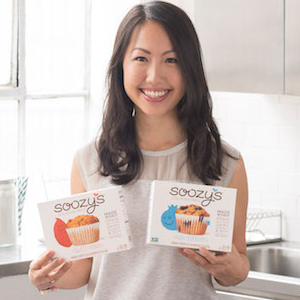
[00:56:47] Ad Read: He has an easy-bake oven and he makes muffins. I do have muffin mix on my... I don't have a rolled-up dollar bill. We got to make the muffin man your ringtone. That's brilliant, Carol. All right. So muffins, as I mentioned, most aren't very good for you. Susan Chen is trying to change that. She's the founder and CEO of Suzy's, which makes muffins from unprocessed, clean ingredients that contain no gluten or grains. Ray, you're salivating. I am. I am. We spoke with Susan at Nosh Live Winter 2017, where she explained the mission and development of the brand included Did This edition of Elevator Talk.
[00:57:21] Cold Brew: It's time for Elevator Talk, where we put a founder in an elevator with their dream investor. Let's hear what happens. What is your company's mission?
[00:57:30] Mike Schneider: The Susie's mission is to take back the all-American breakfast to one clean, affordable, and delicious bite at a time. The gluten-free category these days is really nothing more than junk food masquerading as health food. And I found this out very quickly once I became gluten-free about four years ago. And what we're really after right now is to change the way people eat gluten-free and bring in super clean ingredients to the entire category and bring health and tastiness back to gluten-free eating.
[00:58:04] Cold Brew: What is your product and how is it different?
[00:58:06] Mike Schneider: So we launch with a line of gluten-free, grain-free products that are also non-GMO project verified. And what we think is so different and special about our product is that not only do we check the boxes for the attributes of being gluten-free and paleo, but it's also incredibly delicious. And we don't use any bad stuff like fillers, gums, additives, stabilizers, preservatives, or flavorings.
[00:58:33] Cold Brew: Who is your target audience? And how do you quantify the market opportunity?
[00:58:36] Mike Schneider: The target market for us is a few different markets. The celiac community and those who are gluten intolerant absolutely love our product because there's no issue of cross-contamination and for once they can actually feed themselves and their kids and their loved ones something that's completely clean and delicious and 100% natural. We also resonate well with people who just want to lead better lives and eat a little bit healthier and who don't want junk in their Food Show anyone between CrossFit athletes to, you know, millennials who are on the go to busy moms, or even to boomers who are just looking for healthier food. We really span a lot of different categories and we're really excited about that.
[00:59:21] Cold Brew: What stage of growth is your company in?
[00:59:22] Mike Schneider: So we just launched in stores right after Labor Day. So we've been in stores for under three months, super new, and we're experiencing tons of wonderful growth. We're now going in about 300 stores across both Texas, as well as in the New York City area. And by the time we hit Expo West, we should be in about a thousand stores.
[00:59:45] Cold Brew: What has been the biggest surprise in starting your company?
[00:59:47] Mike Schneider: The biggest surprise for Suzy's has really been how many different types of consumers that we connect with. I always knew that it would be a wonderful product for those who are seeking a better lifestyle like me. But really, even huge foodies in New York City are loving on our product and bodybuilders also, you know, asking us for product and asking us when we're going to be stocked. So I think that the broad consumer appeal and the enthusiasm has been so wonderful.
[01:00:17] Cold Brew: What do you need from a partner or an investor to go next level?
[01:00:20] Mike Schneider: For us, a strategic partner not only brings capital, but real passion and enthusiasm for the mission of the company. We really believe that we are the cleanest ingredient baked good company out there right now. and we aren't going to sacrifice it for anything. We'll find all the other ways to work around it to make our business profitable for everybody, but we really need people to be behind our mission and to really embrace that quality. Why should I invest in you? You should invest in Suzy's because there's nothing like this in the marketplace. We are absolutely the leader in providing a truly, truly tasty and affordable, clean baked good out there. And we are going to be leading the category in some much needed change in gluten free and now also grain free.
[01:01:17] Ad Read: Well, hey, you know, speak about putting yourself out there at events. You know, Susie came and worked that room really well. She came all the way out from New York to LA, you know, because she knew the opportunity in that room and the value of increasing your network. And she shared a muffin with Ray. I saw it. Lots of muffins. I didn't have any muffins. Susie, if you're listening, send muffins.
[01:01:35] Dave Sands: Just picturing like muffin toasting. Ray, there's some in the freezer. Do you need some right now? We've got them? We have muffins.
[01:01:42] Ad Read: Yes! Thank you, Susie. Snacks will be shared Did This office? All right, thank you. We need the footstep sound of Ray leaving.
[01:01:52] Dave Sands: Door open.
[01:01:53] Ad Read: Should I do the end? Because you left. Yeah, you want to do the end? Yeah, I'll do the end. Ray left.
[01:01:59] Dave Sands: We need the sound of the roadrunner taking off.
[01:02:01] Ad Read: Yeah, we need the Roadrunner joke. If you can splice the Roadrunner sound in there. Or some tire screeching. The Flintstones running sound, whatever, you know that one? Well, we lost Ray, so I'll thank our guests, Ethan Brown, Dave Sands, and Susan Chen. Please send an email to AskATasteRadio for questions, comments, and ideas for future podcasts. On behalf of John, John, Ray, and Carol, I'm Mike Schneider. See you next time. I'm back. I'm back. Hold on. Come on, you guys. Did you do the ending?
[01:02:26] Cold Brew: I did it.
[01:02:26] Ad Read: All right, fine.