[00:00:10] Ray Latif: Hello, and thanks for tuning into Taste Radio, the number one podcast for the food and beverage industry. I'm Ray Latif, the editor and producer of Taste Radio, and with my co-host for this episode, John Craven, Jacqui Brugliera, and Mike Schneider. We are recording from three distinct places across the United States today. I am in Vail, Colorado, Jackie, in San Diego, and Mike and John in the usual spot of Newton, Massachusetts.
[00:00:37] John Craven: It's not as exciting.
[00:00:38] Ray Latif: Not as exciting. Sorry. Sorry.
[00:00:40] Jacqui Brugliera: Yeah.
[00:00:41] Ray Latif: What do you think of my fit? My veil fit?
[00:00:43] John Craven: Very Colorado. Never have seen you in a vest.
[00:00:47] Jacqui Brugliera: Did you suddenly become an Invest In was going to say, he's a venture capitalist.
[00:00:50] Ray Latif: Yeah, I think this is my calling is to wear this kind of clothing such that I become a VC investor or private equity investor. And you know, all I need is what, $20 million to get started. So if anyone's listening and they want to front me some cash, please let me know and send an email to ask. Actually, don't send an email to ask because then John's going to find out.
[00:01:13] Jacqui Brugliera: That's going to be weird. It's going to be weird. Don't send us that email at all. Please don't.
[00:01:17] Ray Latif: Yeah. I'm in Vail, which is the home of Manitree, which is a private equity firm focused on the future of human health. They held a Leadership Summit over the past couple of days where they invited the leaders of portfolio companies, including Gotham Greens, HealthAid, The New Primal, Good Culture, and True Food Kitchen as well as Verde Farms. And there were some speakers who talked about industry trends, news, information as it relates to how the food and beverage industry is evolving. And then, you know, a bunch of the time was also spent as a powwow for folks to get to know each other a bit better and talk about strategies for 2024 and beyond. I recorded interviews with a bunch of the CEOs. They will be forthcoming in future episodes of Taste Radio. But in terms of the speakers, some really interesting takeaways from folks like Nick McCoy, who is one of the co-founders of Whipstitch Capital, which is a Massachusetts-based investment bank. Everyone knows Nick. John, you've known Nick for some time, yes? Sure.
[00:02:25] Mike Schneider: Yeah. Sure. Okay.
[00:02:27] SPEAKER_??: Yeah.
[00:02:28] Mike Schneider: I was like hitting me with the real tough questions here. Yeah, I'm just sitting here thinking Why did we send the guy who doesn't ski to fail?
[00:02:36] Jacqui Brugliera: We're all thinking over here. I'm like gray is gonna go nowhere near the most famous place in Vale He thinks Manna Tree is the most famous thing Ray would also be one of those like he'd have like a one-piece suit That's just white
[00:02:50] Mike Schneider: That he skis in.
[00:02:51] John Craven: Like a snowsuit, yes.
[00:02:54] Mike Schneider: He's like in a powder blue or a Manchester United snowsuit. And he's just wiping down all the lifts with like this.
[00:03:02] Ray Latif: I intended to ski but my flight home got cancelled and so they had to give me an earlier flight.
[00:03:07] John Craven: Do you ski, Ray? No, you're gonna get a ski.
[00:03:11] Ray Latif: I a pre ski as much as possible.
[00:03:12] Jacqui Brugliera: You're gonna start That's probably the best place to start. I'm sure they have great lessons and sure plenty of varied terrain.
[00:03:19] Ray Latif: Oh my god, so jealous That was my plan was a good morning and get a couple lessons Hope that I don't break my neck and fly home, but my plan was thrown off breaks his neck in a beginner lesson That's a new one. Ouch. Yeah partly because I have to talk to you guys about you know, I
[00:03:37] John Craven: Ah, so we're taking over your ski time right now.
[00:03:39] Ray Latif: Exactly.
[00:03:40] Mike Schneider: Exactly. I hope the truth comes out. Sherlock Jackie. Hope you're coming back with some of those down vests for the rest of us.
[00:03:49] Ray Latif: Down this thing I had to buy this myself what? Give these away it feel like when you come off the plane that you start You know I did I thought it was like Hawaii when they give you a lay and get off the plane I have like six No, I just wanted to fit in Accomplishing it. Yeah, I think so too. All right. Anyway back to Nick McCoy.
[00:04:13] Jacqui Brugliera: Sorry start writing checks and we'll see what happens.
[00:04:16] SPEAKER_??: Oh
[00:04:16] Ray Latif: So Nick McCoy, along with Mike Bergmayer, the co-founders of Whipstitch Capital. And so in Mike's presentation... Hey Sean, do you know Mike Bergmayer? I've heard of Mike Bergmayer, all for crying out loud.
[00:04:26] John Craven: Here we go.
[00:04:26] Mike Schneider: I think we've been to his house once to record an episode of this podcast. Yes, we did actually in Portland.
[00:04:32] Ray Latif: Portland, Maine. So some of the key takeaways, VC investors are deploying less capital than before COVID, which was a little eye opening. The NPI recession, as in the natural products industry recession, is over and consumers are moving back to better for you. As we know, there was a time when everyone was going back to these comfort, legacy food brands. And it seems like, according to Nick, and data that he pulled from Nielsen IQ that people are more interested in healthier and better for you products. What was interesting about some of the key attributes of some of these better for you products was that there was a hierarchy of importance to consumers who shop natural organic. And at the top of the list was just the common attribute of natural. Do you know what the second most important attribute to consumers of natural organic products, or more specifically, better for you products, is after natural?
[00:05:35] John Craven: Would it be function?
[00:05:36] Ray Latif: It is not. It is Sustainable Packaging.
[00:05:41] John Craven: Really?
[00:05:42] Ray Latif: Yes.
[00:05:44] John Craven: Huh. I didn't know consumers were that hip yet.
[00:05:49] Jacqui Brugliera: Did they panel the Taste Radio team?
[00:05:52] Ray Latif: Jackie, you sound like me dropping words like hip. And that's from a survey? This is from Nielsen IQ data. Actual data. Okay. Actual data. Yes. Okay. The third most important attribute is environmental sustainability, then clean label, then social responsibility. Better for you was next. Plant-based was second to last. And guess what was last? Taste, GMOs. Now, taste was interesting. I asked Nick about taste, but it wasn't taste. It's organic. Organic was last. They're not looking as intently for things that are organic as they might be, I guess, for Sustainable Packaging.
[00:06:32] Jacqui Brugliera: Isn't that part of Clean Label? No. I guess not. Who knew? Who knew? Who knew? I want to see who designed this survey.
[00:06:40] Ray Latif: Well, you can talk to the folks in CSIQ because they're not very well known. They're a small company, haven't been around very long.
[00:06:47] Jacqui Brugliera: They don't know what they're doing When In comes to surveys, you know. They haven't been doing it for years and years and years and years for anything.
[00:06:52] Ray Latif: You have reason to doubt them, Mike, for sure.
[00:06:55] John Craven: I think it's interesting because like, I don't know, I feel like there's still some improvement as far as brands go and companies go on their packaging. Consumers are looking for this, but are they actually finding the Sustainable Packaging that they're looking for?
[00:07:09] Ray Latif: Doubtful. That's a good point, Jackie. But I think it is putting an onus on emerging brands and legacy ones as well to think about Sustainable Packaging as they're developing their brands. Because as Nick pointed out, younger consumers are a powerful force for sustainability. Right now, you see a big percentage of people who are buying brands that embrace environmental sustainability and Sustainable Packaging on the younger end of consumers. And he noted that when these consumers start to enter the workforce and get better jobs and make more money, they're gonna have even more of an impact on the industry as a whole and demanding things like sustainability and environmental friendliness.
[00:07:57] Jacqui Brugliera: Well, this also goes back to what Jackie just said was really key here. Are they finding what they're looking for? And I think it sounded like in that survey that people were prioritizing the things that they can't find and that the things that are lower down in the survey have become more table stakes or easy to find. So they're not saying it's their priority anymore because it's there. Possibly. I'm not sure. You shouldn't put a couple of marketers together to talk about a survey, right? Because we're going to talk about the design. We're going to talk about the SKU. We're going to talk about, I mean, it's fascinating. Yeah.
[00:08:32] Ray Latif: Or you should, and it should be another podcast. Well, if you want to follow up with Nick about that, it was one of many slides that he shared as part of his presentation. There was another really interesting speaker that we heard from at the summit. His name is Andrew Petz, who is the M&A director for General Mills. He was pelted with questions and I guess comments from those in attendance. Some of the things that he talked about, I think, might be hard to hear as the founder of an emerging and disruptive company. But he did note that emerging brands will always matter to big CPG. The question is, Can big CPG, in this case, General Mills, do it ourselves? Can we get a foothold? Can we buy it? He also noted that General Mills, and probably by extension other strategic companies, are not Good Match scaling $25 million acquisitions, which is probably why you're not seeing a lot of that in the M&A space, or at least of late. I'm not gonna mention The New of the brand, but it's a well-known serial brand in our space that has done pretty well. Great revenue, seems to have a ton of loyal consumers. And from what I took from the conversation is that they've been shopping the brand around, but no one's biting. And it's because their valuation is too high. And the reality is that a lot of these strategics are thinking about whether or not they can create the same product with a lot less capital and just do it internally. And it seems like that is a real risk. for emerging brands in that, yeah, you might have a great customer base, you might have a brand that's at the tip of the tongue of many consumers, retailers, and investors, but if there's no acquirer, it's like the, if a tree falls in the forest, does anyone really care kind of thing. I don't know if that's the best comparison, but it was really interesting to hear about that. I mean, you might as well have just said Magic Spoon there.
[00:10:38] Jacqui Brugliera: Yeah, I was gonna say, is it a brand that rhymes with tragic loon?
[00:10:41] Ray Latif: I didn't say anything. Also at the summit was The New and only Holly Adrien. Everyone knows Holly, who heads up natural organic and innovation for Kroger. This was kind of interesting. Did you guys know what the number one natural organic brand in the world is?
[00:11:01] Jacqui Brugliera: I bet Holly knows.
[00:11:04] Ray Latif: She should, yeah. Any takers? None? It's a $3 billion brand. Enlighten us, Ray. It is Simple Truth, which is the Kroger-owned brand. It's their private label brand for Natural Organic. Nice. And definitely interesting to think about how branded products fit into the Kroger, I guess, ecosystem when that is such a big part of their business. But, you know, she did note that she's always talking to better for you brands and emerging brands in the natural organic space, always championing those brands. Just that when folks are pitching Kroger and pitching her specifically, You want to be specific about what part of their business that you are looking at and what kinds of categories you're targeting because Kroger is a humongous company. It's like a multi tentacled company with lots of different banners, lots of different categories that they're focusing on. And so she's like, look, you got to do your homework. You got to know about our business. You got to know about what value you can bring to Kroger as much as you are pitching your own brand. I know that sounds really basic and simple, but I don't think it's something that a lot of people think about as much as they probably should.
[00:12:23] John Craven: Yeah, I feel like brands are a great opportunity for a retailer to just bring in new consumers for trial or your own consumer base. I mean, it sounds like they're doing a great job with their private label, but that doesn't lead to growth. They're hitting people that are already in their stores, you know, looking for that product, but they might be interested in trying something new that day, or someone might enter the store that didn't previously because they're looking to get their favorite product.
[00:12:52] Ray Latif: That's a good point, Jackie. And one of the things Holly touched on was how Kroger is Invest In and working on digital more often than they had in the past, because it seems like digital is a way to boost awareness and enhance the sort of, I guess, availability of natural organic brands in their stores. So, you know, sometimes when you shop on like an Instacart, and I'm not picking on Instacart, I love Instacart. but you're looking for a specific product that you know is in their stores. You know is in a Kroger or a Stop and Shop or a Wegmans. And you're like, I know it's there, but for some reason I can't find it. on Instacart, that doesn't really help these brands and doesn't yield the kind of awareness that is going to benefit, I think, the industry as a whole, the natural organic industry. So they're working on that and they're Invest In that, which is great to hear. Someone asked her, Holly that is, about some expectations and predictions for Expo West, which was really fun to hear. Nobody wants to hear about that though, right? So let's just move on. I'm kidding, I'm kidding, I'm kidding.
[00:13:57] Jacqui Brugliera: It's Ranch Everything, right? Give it to us.
[00:13:59] Ray Latif: Okay, so she noted that nostalgia and comfort food is something that she expects to continue to be an important trend. Better for you for sure, but not necessarily great for you. So I think people are, and consumers that is, are more comfortable with the fact that a product might be better for you but it's not like the best thing for you. It just has to taste great. It has to evoke or elicit some sort of feeling of love and happiness. And, you know, I think that's kind of where the whole nostalgia thing came from is people just wanted to feel comfort.
[00:14:35] Mike Schneider: Lots of better for you, uh, candy products that fit into that bucket.
[00:14:39] Ray Latif: Yeah, for sure. For sure. Gut health, she mentioned. And plant-based. Plant-based was another thing that came up quite a number of times in the past couple of days. But sort of a plant-based 3.0 where consumers want whole food ingredients. They want less ingredients and more clean label ingredients, specifically as it relates to plant-based food. Anyone for a mooskie?
[00:15:03] Jacqui Brugliera: Sounds like you're explaining Mooski. I'll take one.
[00:15:06] Ray Latif: Yeah, going back to Nick's presentation for a second. He talks about how the number of ingredients in products is actually rising. And this is all again, based on that Nielsen IQ data. But consumers, you know, are looking at those ingredients more closely. So you could have a ton of ingredients. And if they're all clean label or perceived to be clean labels, fine. And I asked Nick, Why do you think we're seeing more ingredients? Is it Time To better taste? You know, people just want a better taste and, you know, a way to get to that is to have more ingredients. You said, yeah, it's likely that that is driving a higher number of ingredients and products. One other thing from Holly's talk was, you know, it's interesting to think about the benefit of a product. versus a free from product. And what I mean by that is, instead of saying, oh, we don't have this, you know, we do have this is more enticing to consumers. So brands that keep saying, oh, well, we don't have gluten, or we don't have stevia, or we don't have this, we don't have that. It seems like consumers are like, well, it's great that you don't have that, but what do you have, you know? And so I think consumers are moving in that direction according to Holly. And are When In our daily standup, Jackie?
[00:16:20] Jacqui Brugliera: It sounds exactly like what we talk about. all the time. Well, there you go. Don't talk about what you're not. Let's talk about what you are. And also just do that in the simplest way possible. And if you're trying to explain too many things, then you just don't know what you are.
[00:16:36] John Craven: Yeah. And often when you're talking about what you're not, you have to go back to then talk about what you are. So it's like a more complicated conversation rather than just focusing on the benefit or having a clear, concise message.
[00:16:51] Ray Latif: Absolutely. All right, well, as I mentioned, a lot more coming from this summit in The New few weeks on Taste Radio. Look for those interviews coming soon. One thing I didn't see at the events, and I was a little disappointed because I felt like I needed, you know, you have these long trips going out to the West Coast and your cognitive function just is just not what it is. when you were back East. And so I needed a dose of Cognizant in my life. We just need more. We just needed to blanket United States with Cognizant. And I say that because I love Cognizant, but also because they're the presenting sponsor of this episode of Taste Radio. Cognizant is a clinically tested nootropic ingredient that delivers a patented form of acetylcholine to supply your brain and those of your consumers with the energy it needs to stay sharp. Learn more at cognizant.com. That's C-O-G-N-I-Z-I-N.com.
[00:17:42] Mike Schneider: Someone clearly needs some Cognizant because they are in Vail and think they're on the West coast, but hey.
[00:17:49] John Craven: Close enough, you know.
[00:17:50] Mike Schneider: I don't know. Geography, not a strong point.
[00:17:52] John Craven: It's like a two hour flight from me.
[00:17:54] Jacqui Brugliera: I don't know. I think this is considered the West Coast. No, I'll find the ocean.
[00:17:57] John Craven: Can you see the ocean out the window, right?
[00:17:59] Mike Schneider: I'm gonna go with no. Find the ocean.
[00:18:01] John Craven: I would say I'm on the West Coast.
[00:18:03] Mike Schneider: You're in what one calls the Rockies.
[00:18:07] Ray Latif: You know what brand does use cognizant in some of their products is C4. The energy drink brand that is One of the most, or one of the fastest growing that we've seen in recent years, C4 is marketed by a company called Nutribolt. Nutribolt was in The New recently because they led a $90 million Invest In a supplement brand called Bloom Nutrition. I think we're pretty familiar with Bloom Nutrition. I did a interview with the founders, Mari and Greg Llewellyn, a few episodes back. Really interesting company, interesting to hear about how they've leveraged TikTok and their popularity on TikTok and Instagram to develop a loyal thong of consumers using e-commerce data and insights to land pretty big retailers like Target, I guess the thing that was really surprising to me was the amount of the investment, $90 million for a minority investment at that. Going big. Yeah, definitely not going home, but definitely going big, yeah. I don't know, I just did not see this deal coming. John, your thoughts? Yeah, I mean, I totally saw it coming.
[00:19:17] Mike Schneider: No, I mean, I really like this partnership, whatever you want to call it, of these two brands, just in that, you know, they sort of are, I mean, they definitely play in the same general space, but C4 is a very different brand and probably consumer-based than Bloom. So it kind of gives them like a new horse in the race, but in a race that they're very, you know, familiar and successful in already. So I think it's pretty cool. Excited to see what happens.
[00:19:49] Jacqui Brugliera: And Bloom is a beautiful brand with, you know, insane e-commerce potential. They're doing really well in e-commerce. Exactly. But you, if you want to scale that. then what do you think a bunch of that 90 million is going to go into? It's probably partially product and, you know, to be able to add more product to the mix, but some of that's going into the marketing budget.
[00:20:10] John Craven: And C4 has crushed it in retail. So I think it makes sense to tap into e-commerce and maybe bring their capabilities in retail to bloom. There's just like a lot of opportunity there. And they're both kind of in the supplement functional space.
[00:20:27] Ray Latif: Yeah. They're putting the fun in functional. So Nutribullet's stake in Bloom Nutrition is a 20% ownership stake according to the article on BevNET. The article also noted that the $90 million financing has Deep Eddy Vodka founder Clayton Christopher and consumer investment firm Amberstone coming on board as well. Congratulations to all involved and particularly Mari and Greg Llewellyn. Way to go.
[00:20:54] SPEAKER_??: Yeah.
[00:20:55] Ray Latif: Also a huge congratulations to Madeline Hayden, who is the founder of plant-based coffee creamer brand Nut Pods. We've known Madeline for a very long time. I remember when she used to come to our office in Watertown. It was really fun to see her. She used to come to our food and beverage education events. And it's just, it's, I don't know. I always love this part of doing what we do. You know, when we see these bright eyed founders and You know, there's a lot of skepticism and naysayers, and then just look what she's built. It's incredible. So she sold Nutpods, or Nutpods was sold to a Kroger-backed investment group called M. Pearl Rock. And details or terms of the deal were not disclosed, but Nutpods is in 15,000 retail stores. It's a top-selling plant-based creamer brand with a natural retail, according to the company. I don't know, Madeleine just, whenever I think about her, I just, I always am happy. She's just such a good person and she's just always been positive about her brand. She's always had a smile on her face. She's never had anything negative to say about anyone. I just think it's, it's amazing.
[00:22:04] Jacqui Brugliera: What more is there to say about Madeleine except she's the best.
[00:22:08] John Craven: Yeah. She's like the sweetest human ever.
[00:22:11] Ray Latif: Yeah. All right. Let's get to new products. I have a really interesting new product that hasn't even hit the market yet.
[00:22:19] Whipstitch Capital: Ooh.
[00:22:20] Ray Latif: HealthAid, as I mentioned, is part of the mandatory portfolio. And so it was leaked and it was also reported on DevNet that HealthAid is launching a new better for you soda. This one is called Sunsip. Sunsip is intended to compete with the Ollie Pops, Poppy, Good Culture Pops of the world. Their tagline is soda with benefits. And it has five grams of sugar per 12 ounce can. And this strawberry vanilla flavor in particular has 25 calories in total. It's a Booch Pop 2.0, Ray.
[00:22:55] Jacqui Brugliera: What's it like? Tell us.
[00:22:57] Ray Latif: Well, the interesting thing, the first thing that someone from Manitree mentioned about this product is that it does not contain stevia. As we know, stevia is a very divisive natural sweetener and it's something that people have tasted once and they'll never taste again because it's such an intense flavor. So this product is sweetened with a combination of apple juice, agave, cane sugar, and monk fruit, which is interesting. I tried the cherry cola variety, and the monk fruit was very noticeable at the front of the palate. But as you took a few more sips of Sunsip, it became less noticeable and a better tasting product. Also, it just doesn't taste like Ollipop. It doesn't taste like poppy. It doesn't taste like cultural pop. It has a very specific flavor onto itself.
[00:23:48] Jacqui Brugliera: Does it taste like health aid?
[00:23:50] Ray Latif: No, definitely not. And it doesn't have a kombucha base as well. So if you recall, HealthAid Pop, I believe, was their first attempt at a soda product. It came in a slim can. It just, for some reason, it didn't work. I think originally it was called Booch Pop, and then they changed it to HealthAid Pop, and then the whole thing just got discontinued entirely.
[00:24:10] Mike Schneider: Now just go to SunSip. It's cool.
[00:24:12] Ray Latif: Yep.
[00:24:13] SPEAKER_??: Okay.
[00:24:14] Ray Latif: Well, I don't know if I can bring a can home because I don't know if I'm checking a bag, but if I do, this one's yours, John Craven, you can talk about it. But Sunsip is launching nationally at Whole Foods on February 1st. I spoke with the CEO, Chris Lansing. There's a lot of excitement internally about this product and its potential to really broaden the base of consumers for health aid.
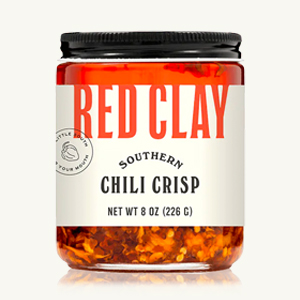
[00:24:36] Mike Schneider: Can I do one? Yes, please. I don't know. Should I go for... I think you should do that one first. This one first? Yeah. Yeah. Okay. Well, this that I've got here is a new Southern Chili Crisp from a company called Red Clay. They're a hot sauce company in Charleston, South Carolina. And this... Founded by Molly Feining. There you go. This stuff is peanut based, so it's peanut oil, peanuts, garlic, and shallot. It's pretty tasty stuff. Here, Mike, you want to try some? Yeah, I want to. Absolutely. This is dangerous here. Are you going to do that?
[00:25:14] John Craven: Just taking a spoonful and you're not going to put it on anything?
[00:25:16] Mike Schneider: I neglected to bring any tasty snacks. Jackie, this is how I eat chili crisps. This is how I do it. I really like this stuff. It's the peanut flavor is, uh, is definitely unique. Not a hundred percent sure what I would do with it just yet, but Oh yeah. Just go for a full, just nuke yourself, Mike. It's super peanutty. Yeah. Good. What is The New of the brand again? Red Clay. Red Clay. Yes. And marketed as a Southern style chili crisp. So quite tasty. Highly recommend this stuff. Yeah, it's tasty. And while we're on the subject of hot sauces, I have the latest from Truff, which is their jalapeno lime, black truffle infused hot sauce. This stuff is also, uh, Here, Mike, just keep going on hot sauce. Why not? This is a lot milder than most of the chili crisps. I mean, it's good. It kind of tastes more like a sauce than an actual like hot sauce. Like, I don't know. I tried putting this stuff on some tacos. It was pretty tasty.
[00:26:24] John Craven: Does it taste like a peanut sauce? You know, like when you get like Thai food.
[00:26:27] Jacqui Brugliera: It's a little bit like that, but it's not quite as sweet or as thick, but it definitely has some of that same essence, I'd say. Yeah. And now we're, now we're going for the trough jalapeno lime, black truffle infused, of course, hot sauce. Ooh, that's good. Yeah. Thank you, Nick and Nick. There you go. And Molly. But yeah, that's all I've got.
[00:26:54] John Craven: I have a beverage over here to switch it up. It is called Moosie, which is M-U-C-I. It has a sloth on the front, which is kind of fun, but it's plant-based energy with Moosie Lago de Cafe, which I had to research a little bit because I had no idea what that was.
[00:27:15] Jacqui Brugliera: I thought that was a Lamborghini.
[00:27:18] John Craven: Sounds fancy, right? Like luxurious. We see Lago de Cafe. But it is actually within the green coffee bean, like what surrounds the inside of the pod. They upcycle it and it's supposed to have antioxidants and some caffeine. And they also use green coffee in this. So it comes out to after all the different things that they put into it, 114 milligrams of naturally occurring caffeine from Missy Lago de cafe, green cat coffee, green tea, and Grana green tea. Yeah. So they have a lot of ingredients in here, but the taste is actually pretty good. This one is the guava lime. They also have cranberry raspberry and also mango. They don't use any like artificial sweeteners or anything. So I think that's why the taste doesn't taste like some other energy drinks that I've tried. It's very well balanced. They use beet sugar, pink guava puree. So a lot of natural plant-based ingredients in this.
[00:28:16] Jacqui Brugliera: I have some questions.
[00:28:17] John Craven: Yes.
[00:28:17] Jacqui Brugliera: Are they, are they leaning really hard into the mercy? What kind of, what did you say? Mercilago? No, that's the Lamborghini.
[00:28:24] John Craven: Musilago.
[00:28:25] Jacqui Brugliera: Musilago. Okay. Decafé. And is it like a tiny word on there or? Is the word coffee bigger, I hope?
[00:28:32] John Craven: It's right underneath camp-based energy.
[00:28:34] SPEAKER_??: Okay.
[00:28:34] John Craven: And also on the website, they have a whole specific page to explain and educate the consumer on it.
[00:28:41] Jacqui Brugliera: My second question is why would you associate a sloth with an energy drink?
[00:28:47] John Craven: I know. So they were saying on their website that this is supposed to help you shake the sloth.
[00:28:53] Jacqui Brugliera: I see. So it's a very awake sloth. I got it. Okay. That makes sense. Yeah.
[00:28:57] Ray Latif: I can't wait to try it. I love guava lime as a flavor. I've never heard of anyone using guava lime.
[00:29:03] John Craven: Yeah, it's really nice. It's really, really tasty.
[00:29:06] Jacqui Brugliera: Hopefully we'll get to try some of that at Expo, maybe? Maybe. Maybe. Secret vial? Who knows? I'd love to try some.
[00:29:14] Ray Latif: Jackie, you have a bit more on your table there. What else you got?
[00:29:18] John Craven: I do. So one of the things my friends make fun of me for is I always have frozen peas because you never know when you're going to need them. And they're really easy to just microwave and eat whenever you want.
[00:29:31] Mike Schneider: So many questions. Like, what, do your friends just go right to the freezer? Like, what goes on?
[00:29:37] John Craven: Well, they see me doing these things, and they're like, what are you doing?
[00:29:39] Jacqui Brugliera: They're like, if someone's chasing you, just throw them behind you and try to trip the people.
[00:29:43] John Craven: Yeah, they're great if someone like intrudes into your apartment and just throw them on the ground.
[00:29:48] Whipstitch Capital: Oh boy.
[00:29:49] John Craven: Multi multifunctional, but that's my love of peas is why I picked this product up in my local Lazy Acres. This is Bhuja, B-H-U-J-A, and this is their crunchy seasoned peas. And Buja has a variety of like nut mixes and peas. And their main thing is that the company started a long Time To with just like a push cart of spices in Australia. And all of their products are really focused on flavor and using unique spices. And these are really, really tasty. They're just, it's really simple ingredients too. It's just green peas, sunflower oil, salt and spices. That's pretty much it. So it's really healthy, clean, Label snack and it is an Australian brand that's making its way to the US The New big trend at Expo West emergency peas
[00:30:46] Ray Latif: That brings us to the end of this episode of Taste Radio. Thank you so much for listening. Taste Radio is a production of BevNET.com, Incorporated. Our audio engineer for Taste Radio is Joe Cracci. Our technical director is Joshua Pratt, and our video editor is Ryan Galang. Our social marketing manager is Amanda Smerlinski, and our designer is Amanda Huang. Just a reminder, if you like what you hear on Taste Radio, please share the podcast with friends and colleagues. And of course, we would love it if you could review us on the Apple Podcasts app or your listening platform of choice. Check us out on Instagram. Our handle is bevnettasteradio. As always, for questions, comments, ideas for future podcasts, please send us an email to ask at Taste Radio.com. On behalf of the entire Taste Radio team, thank you for listening, and we'll talk to you next time.
[00:31:36] Whipstitch Capital: you