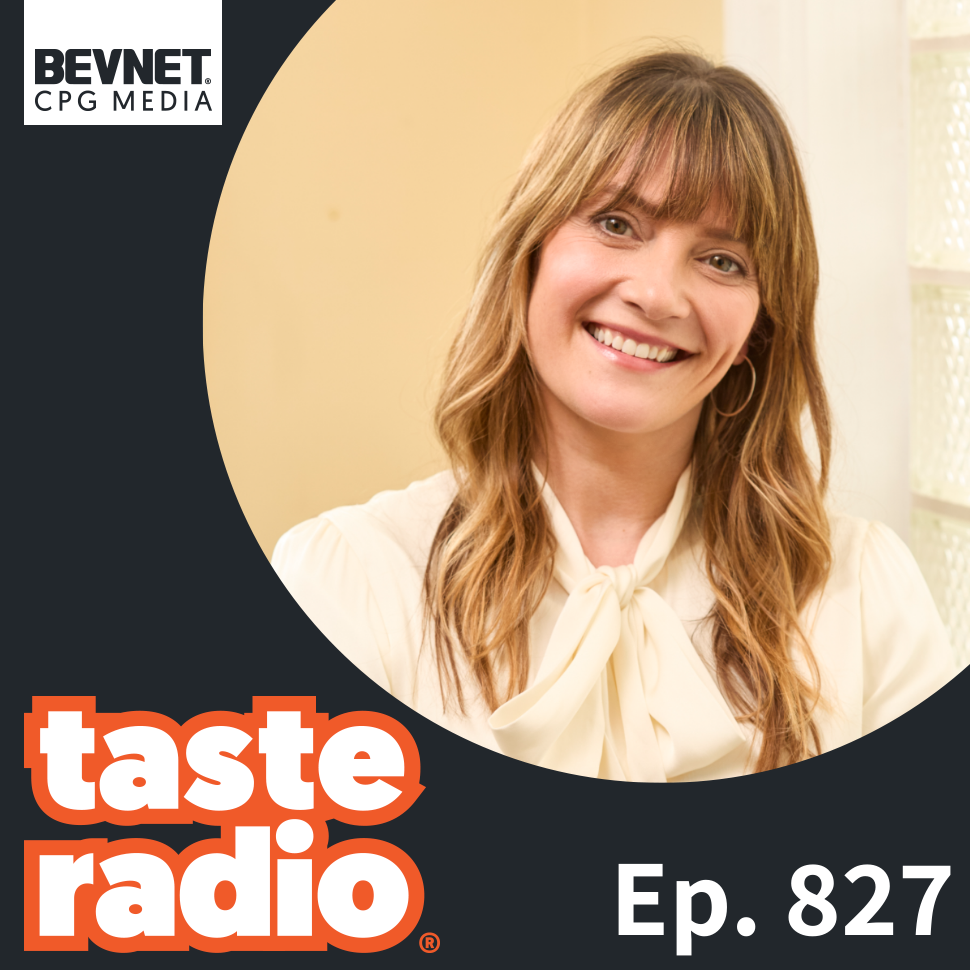
[00:00:10] Ray Latif: Hello, friends. I'm Ray Latif, and you're listening to the number one podcast for anyone building a business in food or beverage, Taste Radio. This episode features an interview with Amy Guittard, the CMO and a fifth-generation family owner of Guittard Chocolate. How does a 156-year-old business continually evolve to meet the needs and palates of modern consumers? It's a question that Amy Guittard often thinks about. Amy is the CMO of Guittard Chocolate, a family-owned and operated chocolate company founded in 1868. Based in the Bay Area, Guitard's primary business is as a supplier of premium chocolate to some of the world's most recognizable candy and sweets brands, as well as large and independent bakeries. Guitard also markets consumer products, such as baking chips, chocolate bars, and cocoa powder. Following a six-year career at Clif Bar, Amy joined Guitard in 2012 and has led brand strategy, building and refining its platform initiatives. She's also played a key role in the company's innovation strategy, supporting the development of products that have enhanced the offerings of Guitard's business customers. In the following interview, Amy speaks about the duality of her role as both a steward and agent of change for Guitard, challenge of competing with both small artisanal brands and large conglomerates, how she helped the company navigate a major threat to its core business, and how she thinks about creating more affordable and accessible products for consumers. Hey folks, it's Ray with Taste Radio. Right now I'm honored to be sitting down with Amy Guittard, who is the CMO of Guittard Chocolate Company. Amy, great to see you.
[00:02:04] Amy Guittard: Hi, thanks for having me.
[00:02:06] Ray Latif: Thanks so much for coming all the way from San Francisco to come and see me here at the Fancy Food Show. That's the only reason you came here, right?
[00:02:12] Amy Guittard: It's 100% the only reason. Absolutely.
[00:02:13] Ray Latif: Yeah. How many times have you been here?
[00:02:15] Amy Guittard: Oh my gosh.
[00:02:15] Ray Latif: To this show, that is.
[00:02:17] Amy Guittard: Probably 50 times? I don't know.
[00:02:21] Ray Latif: Okay.
[00:02:22] Amy Guittard: Well, there's two shows a year.
[00:02:23] Ray Latif: You're right.
[00:02:24] Amy Guittard: And I'm 41. Okay. And it's my family business. So I just take it the fact that we've been going since maybe before I remember. I don't know. Maybe that's being a little too wild. I mean, we were just talking about the fact that you grew up coming here.
[00:02:36] Ray Latif: Yes, as well. I always used to come to the New York show as a kid. My family owned a chain of gourmet food stores and I was very lucky to grow up on tinned fish and high-end charcuterie and things like that. I was never a big cheese guy. This is something that I don't really share too much on the podcast because it's not like that I have a hate or like a real distaste for cheese. It's just that's not something for me. Well, you know come here. They just gorge.
[00:03:03] Amy Guittard: Oh, yeah I always say that you walk the aisles and you're like looking for something savory and then you eat something savory and then you want something sweet then you eat something sweet and you're like, oh, I need something savory to you know shift my palate Yeah, find something savory in the cycle just goes on and on for the entirety of the show and by then you just get to try everything totally totally I started going to the winter show about ten years ago and
[00:03:26] Ray Latif: And part of the reason I love to go to that show is because it was in San Francisco where you're based. It sucks that it's not there anymore. I don't know.
[00:03:33] Amy Guittard: We miss it.
[00:03:34] Ray Latif: Yeah.
[00:03:34] Amy Guittard: Yeah. We miss it. I actually haven't been to the Vegas show.
[00:03:37] SPEAKER_??: It's good.
[00:03:37] Ray Latif: It's not.
[00:03:38] Amy Guittard: Just a different vibe.
[00:03:39] Ray Latif: It's a different place. Yeah. Like the Moscone Center, even though it's sort of underground and kind of dark down there, like when you get out, you know, you have that wonderful, vibrant city.
[00:03:48] Amy Guittard: Yeah, we don't have I mean, we have good food awards and mercantile and stuff. But other than that, this is that was the show the big like food show that we had. So we miss it. I love coming to New York. I used to live here. I went to college here. So it's nice to come back to the city. And then you know, winter Fancy Food as well in Vegas. Yeah.
[00:04:06] Ray Latif: Your brand has a big presence here at the Fancy Food Show, as I would expect, yes?
[00:04:10] Amy Guittard: Yeah.
[00:04:11] Ray Latif: You know, Guittard Chocolate, I think people are very familiar with your brand. I don't know how many people are familiar with the history of your brand. Talk a bit about how it started, the origins, and where it is today in terms of retail distribution and whatnot.
[00:04:25] Amy Guittard: Yeah, so Guitard is the oldest continuously family-owned chocolate company in the country. It was founded by my great-great-grandfather in 1868. He came from France looking for gold, like many people, and he brought chocolate with him to trade for mining supplies. His uncle had a chocolate factory in France. We got to San Francisco. He realized that the merchants were the ones that were doing better than the gold miners. So he went back to France, learned how to make chocolate, and then returned to San Francisco. Our first factory was on Sansom Street, so right along the Embarcadero, if you can envision that. This is where all the commodities were being brought in. And you can imagine Folgers Coffee, Hills Brothers Coffee, Ghirardelli, Guitard, all these sort of coffee roasters, chocolate makers, all along the Embarcadero. So there's stories of just smells of coffee roasting and cocoa beans roasting kind of in the air. And they were so close to where the peers were where the beans and commodities were being brought in. So it was pretty seamless. At the time, you couldn't subsist on one making one thing. So we didn't just make chocolate, we did coffees, teas, and spices as well, anything that you could grind. So we'd bring all that in, we'd sell them as a sort of a purveyor. And then the 1906 earthquake happened, burned our factory down. And that's when we consolidated down just to making chocolate. We moved our factory to Main Street, which is not too far from that original factory. And we were there until the early 50s. And by that time, we moved our factory down to Burlingame, which is where we are today. Imminent domain, they decided to build a freeway over our San Francisco factory on Main Street. But that's the factory that my dad grew up going to when he was a young kid. And then in the early 50s, that's when we moved down to Burlingame. So we've been there ever since. It's where we roast. mill, refine, conch, deposit most of our products. And then we have a second facility up in Fairfield, which is about an hour or so north of San Francisco. And that's where we have our new dairy free line, a lot of high speed packaging, newer equipment, but everything's still roasted in Burlingame.
[00:06:14] Ray Latif: Amy Guittard is sold globally.
[00:06:18] Amy Guittard: We're sold globally. A lot of people don't realize about 80% of our business is B2B. So we sell chocolate in as an ingredient to pastry chefs, confectioners, bakeries, things like that. Other CPG companies that use chocolate again as an ingredient. And then a smaller portion of our business is on the retail side. So baking chips, baking bars, baking wafers, cocoa powders, things for home bakers to use. You can buy us at, you know, Whole Foods and other sort of premium grocery stores.
[00:06:44] Ray Latif: Has that always been the case? Has it always been 80% sold B2B and 20% retail?
[00:06:49] Amy Guittard: I'd say so. Yeah. I mean, I think most of our bread and butter has always been even back historically, you know, kind of selling chocolate as an ingredient or, you know, our first product was a, it's the equivalent of what our grand cacao is, but it was called sweet ground chocolate and it was intended for drinking. You could also bake with it. We have a really old school recipe book that I found in our archives, which were not great at our archives. They're in just like an old box, but I was fishing through it. We, we just recently read at our office and I was like, Oh my God, this is cool. And it had all recipes for using, again, what our Grand Cacao is, which is a cocoa powder, but it's got sugar and chocolate into it as well. It's awesome to bake with, but it's, you know, it's merchandised and marketed as a hot cocoa drink. But that was our first product that was intended for consumers. We have an old advertisement that says, when the sun comes up, guitar comes down. And it's a graphic of like a hand reaching up on a kitchen pantry shelf and pulling it off the shelf for like to make your drink. So kind of like kitschy, but I think the way that people have consumed chocolate and just in general, it's shifted over time, but it's been 80-20 for as long as I can remember.
[00:07:55] Ray Latif: Has the company benefited from the fact that it's easier in some ways to sell B2B?
[00:08:03] Amy Guittard: Oh, I wouldn't say it's easier. I just say it's so different. We always say people buy from people. You know, for us as a family business, relationships are so important to us. A lot of our B2B business we've had for a really long time. We also have such a support network at our company. We have a great R&D team. We have an awesome quality assurance team, production. And so we really see our ability to partner with customers on the B2B side as helping them make the best product. I kind of call it this evolution of artistry. So a lot of the work that we do on the ground with farmers is around flavor and quality and investing in flavor so that they're able to cultivate a fine flavor beans that we can give them sort of a premium for that. But with the quality sort of cocoa farmers are sort of artists unto themselves in terms of their cultivation of cocoa beans. We get those beans and we sort of bestow our own level of artistry on those beans when we roast them, when we make a chocolate, and then we give it to whoever is receiving the product. In this case, as we're talking about, an artisan baker or someone making a cookie and packaging it and selling it, you know, on the shelf for consumer to buy. That's a whole other level of artistry. And so, again, if you think about what we do as that as sort of this culmination of collective collaboration, whether it's working with the cocoa farmers or giving a product to an end user, it's that idea of relationship building and working together. And so, again, I don't think it's easier or better. I think it's just very different. On the consumer side, we look at that as an educational opportunity. The consumer shelf is so saturated in so many different categories. Chocolate as well, particularly on the eating bar segment, which we don't have eating bars per se, but we play in the baking section. And we've got chips and wafers and bars and consumers are like, what's the difference between them? You know, so we take it upon ourselves to try to educate consumers, which again, is like a very different world than the B2B side. So I wouldn't even compare them. I would just say they're two totally different worlds that we love playing in equally.
[00:10:02] Ray Latif: Well, I think the through line is that people recognize Guitard as a premium, perhaps even a super premium chocolate brand. And I was in a baker, well, I guess it was like a bakery shop. It was a a place to buy your flour and your chocolate and what have you in Cambridge, Massachusetts two weekends ago. And I saw Amy Guittard Chocolate there and there were some other local brands as well. I think that might be a challenging, I guess, thing for your company these days is that when people talk about artisanal chocolate, a lot of times they think about small local brands and your brand, has such history behind it and such consistency behind that history in terms of flavor and the quality of chocolate that you sell, you know, you're very comparable, I think, in some ways, probably even better than some of the local brands. But people will think otherwise. People think, oh, there are big brands, but they're not as good. So how do you how do you talk about that with consumers? How do you fight that battle?
[00:11:04] Amy Guittard: Yeah, it's a really good question. I don't know if I have an actual answer. I think it's one of those things that as a over 150 year old family business, you're always fighting a battle like that. I always say we're the smallest of the big guys and the biggest of the small guys, which puts us in a really interesting place in terms of being nimble and flexible, and also just having an ability to do volume really, really well. And we pride ourselves on consistency and quality and innovation and things like that. And so, you know, from a marketing side of things, putting new products on shelf, we just launched a 70, I say just, it feels like it was just but a 72% coconut sugar sweetened product that sort of emerged and evolved out of A lot of the products that you were seeing on shelf that were responding to the keto and paleo movement, we never want to put anything on shelf that we don't love. But we also saw that there was this, albeit trends change, right? But there was this, as you mentioned earlier, but we saw that there was clearly like a market need for something in that space. And so we created this new product. that was coconut sugar sweetened. It has inulin in it. So it delivers one gram net carb, which if you're a keto lover, that's speaking to you in that language, but it was also really innovative. The flavor profile is beautiful. It's a 72%. So it kind of hits on a lot of different demands within that space. And so I think doing things like that, that product's available both on the food service side of our business, as well as our consumer side of our business, which gives us an opportunity to kind of have both feed each other, if that makes sense. And so I think, you know, having new innovative products is a quote unquote easy way to keep yourselves top of mind and remind consumers that we are a fresh brand that they can resonate with. But I also think, you know, chocolate's such an emotional product. People oftentimes look at a brand like Guitard or another, you know, adjacent categories, and it is a brand that they know and love from their childhood oftentimes and kind of recreating an adult relationship with it as they grow up and that we're a brand that they can trust and explore and innovate with. I think that's the key to what we do in terms of engaging with consumers and trying to remain relevant.
[00:13:16] Guittard Chocolate: Vibrant Ingredients is the natural ingredient partner powering food and beverage innovation, delivering flavor, function, and protection through a science-backed portfolio. Vibrant delivers purpose-driven solutions that help brands create extraordinary experiences. Discover what's possible with Vibrant today. Visit VibrantIngredients.com.
[00:13:44] Ray Latif: When you are talking to bakeries, whether they're large or small, and trying to convince them to use your products, I mean, it's probably not that hard to convince them to use your products. But again, thinking about, I'm just going to bring up an example. There's a local bakery in Brookline where I live, in Brookline, Massachusetts. It's called Clear Flower. And they just have some of the most delicious croissants you could find anywhere in the world. Check it out, folks. But I don't know what chocolate they use. I would think that if they're using a local brand, it wouldn't surprise me. But if they're using Guitard, it wouldn't surprise me either. But what's that conversation like? And again, this is a small bakery, but for every independent bakery, you add them all up. That's a significant business for sure. But what's the selling point when you're talking to the bakery owners? Again, you mentioned that there's a real emotional connection between consumers. But if your brand, the Guitard brand, isn't listed as an ingredient, How does the consumer know that it's you?
[00:14:42] Amy Guittard: Well, we always say you've probably had more guitar than you realize.
[00:14:44] Ray Latif: Okay.
[00:14:45] Amy Guittard: So if you think about it, there's CPG companies that are using guitar as a packaged product. And then there's the bakeries and restaurants, pastry chefs, confectioners, and then that have could potentially do menu placement or promote, you know, in social or things like on their website. And then you've got a retail product. We love it when customers of ours talk about the ingredients that they source. I think within the food space in general, there is transparency around where people are sourcing their flour and their sugar and what kind of sugar and, you know, their chocolate and things like that. We would never force someone to do that. As I said earlier, relationships are such a key part of our business and who we are and why we do what we do. And, you know, we have some customers who talk very openly about the fact that they use us. And sometimes we've got customers who put us on pack Either in the ingredient statements, you got to squint and look and it'll say, you know, guitar and then parenthetical, you know, what our ingredient base is. Sometimes they say made with guitar on pack. But, you know, it's something that we love when it happens. But other times it's, you know, we just kind of know, you know, in the backs of our heads that it's that we're contributing to the product. I do think it's helpful for, you know, storytelling and things like that. I think it also comes down to the brand that's using us and how transparent they want to be about the ingredients that they're sourcing. We hope that our brand resonates with them beyond just a great quality and that the brand values resonate with them. And a lot of times it does, and that they're excited to share that with their consumers. But it's I mean, it's a really good question. I think it's something that I talk a lot about just when I'm engaged. You know, I had a conversation last night at dinner with a friend of mine just talking about that exact thing, you know, menu transparency. And, you know, what happens when you see a chocolate brand on a dessert menu versus the menu at a bakery, like, you know, saying that they use us in a cookie or something and just the different experience and the right mind that a consumer is in when they see that information. I also think too, you know, like a pão de chocolate or a chocolate chip cookie, that to me, I mean, a pão de chocolate and a cookie, I guess. I have cookies for breakfast all the time. It's almost like a sweet treat versus like going out to dinner is a dining experience where you have a drink and dinner and dessert. And so I think the state of mind that someone's in when they are in those two very different experiences also makes for a different acceptance when a brand is referenced, if that makes sense.
[00:17:10] Ray Latif: It does. It does. Everything you've said makes sense. And you're a great communicator and passionate spokesperson for your brand, as you should be. You're the CMO of the company, and you're also a fifth generation member of the Guitard family and the Guitard brand. You have been the CMO for how long now?
[00:17:28] Amy Guittard: I've been at Cotard for about 12 years, 13 years. I've always been on the marketing side. We wear a lot of hats. I describe us as like 150 year old startup. So we wear like all sorts of different hats there. But yeah, so I've been doing marketing for a while.
[00:17:42] Ray Latif: So in your current role, do you see yourself as? really focused on marketing? Or are you part of sort of the leadership or leadership team of the organization in that you're all kind of driving the brand forward and making decisions about what comes next as stewards essentially of the brand?
[00:17:58] Amy Guittard: Yeah, I'd say the latter. I mean, I think it falls on my shoulders, but we are a family business and everyone is involved and helps drive the vision of the company. And we are small, you know, I think our brand presence on the retail side is You know, we're national, we're global, but our team is small, our business is small, which makes for a really fun environment to all sort of contribute and collectively work toward a vision and brand vision. You know, I'm responsible for sort of overseeing strategy and making recommendations. But the beauty is that, you know, I've got an amazing marketing team and also just a great, the leadership team at the company is just really fun group to work with. We're family business through and through, you know, like I work with my dad, my brother, my cousins. But we also, you know, we have employees who've worked for us for multiple generations and who've known me since I was like in the womb. You know, so we have a really fun environment that we work in. You know, no one's sort of making decisions and bulldozing, which is really great. I'm super, super lucky.
[00:18:57] Ray Latif: Yeah, this is what they call a leading question. Did you always want to be part of the family business? Because you spent about a dozen years at Clif Bar.
[00:19:05] Amy Guittard: Yeah, no, not that long. Not quite that long. I was there for about six years.
[00:19:09] Ray Latif: I'm going to blame my research team on that one.
[00:19:14] Amy Guittard: Clif Bar was amazing. No, I worked there right out of college. I went to college here in New York and then moved right back home to work for my dream company. I knew I always wanted to work in food. I think I always had visions of eventually going into my family business. When I was in college, I was like, do I want to work in the nonprofit side of things or do I want to work in food and business? And I knew I wanted to, as cheesy as this sounds, make a difference and contribute to the world. I don't think that sounds cheesy.
[00:19:40] Ray Latif: I think that everyone should. Aspire to at least do something to make the world better.
[00:19:46] Amy Guittard: Yeah. I think when you're an optimistic college graduate, kind of go one of two routes.
[00:19:50] Ray Latif: And then just become jaded like a couple of years after that, you're like, nothing's going to change.
[00:19:56] Amy Guittard: No, I still believe things will change and that we all have the ability to contribute to that. But that's my. Over-optimized. A tangent. But no, and then I think I kind of just realized that business was really a route to, you know, doing good in the world. If you can build a good brand and a sound business that makes decisions that aren't just directly related to the bottom line. And Clif Bar was the epitome of that. And so I applied before I even graduated from college and they were like, reapply. I got a job and I loved it and it was amazing. And then at the tail end of that, I was in grad school and I was asked to join the family business that we had like a shift. The woman who was handling marketing was leaving and they asked me to join.
[00:20:39] Ray Latif: So I've been there ever since. So it was as much them asking as you wanting to join.
[00:20:44] Amy Guittard: Yeah, I think it was sort of a subtle, there had been some discussions, but it was, I think it was just a matter of time. Again, like I knew I wanted to be in food. I knew I wanted to be in business, which is such a specific niche category. And, you know, I think it was just a matter of time. I think it's hugely important to work outside the family business. And so we kind of have an unspoken rule that, you know, if you're a family member, working outside the family business is really, really important. And so I did.
[00:21:13] Ray Latif: Yeah. I imagine working for Clif Bar. Was Clif Bar still independent at the time you were working there?
[00:21:16] Amy Guittard: Yeah. Yeah. They were at a really exciting time when I was there. There was like before, I think my title was Web Community Builder, which basically meant I ran the blog because it was before we were on Facebook, before social media, like before any of that. And, you know, it was a lifestyle company.
[00:21:33] Ray Latif: You remember that website, Blogger?
[00:21:35] Amy Guittard: I do.
[00:21:35] Ray Latif: I mean, what ever happened to Blogger?
[00:21:37] Amy Guittard: I don't know.
[00:21:38] Ray Latif: I don't know.
[00:21:38] Amy Guittard: Whatever happened to LimeWire. LimeWire.
[00:21:41] Ray Latif: LimeWire, the file sharing company?
[00:21:43] Amy Guittard: Yeah. No, it was like how you were able to download music. Music. Yeah.
[00:21:47] Ray Latif: Yeah. Oh, and download viruses for your computer as well.
[00:21:50] Amy Guittard: Yeah, that's what happened to it. Anyway, yeah, so, you know, it was a really cool time where we were just kind of trying to navigate being able to share the products and the lifestyle of the brand. And so I was kind of responsible for online storytelling, communication, and then that kind of merged into a whole host of other responsibilities. I was always on the creative sort of digital marketing team. Yeah, and then I moved on to the brand team as well.
[00:22:17] Ray Latif: Did you feel like working for Clif Bar gave you the entrepreneurial foundation to come back home, so to speak, and think about Guitard as an entrepreneurial business or rethinking it more of as an entrepreneurial business than it had in the past?
[00:22:35] Amy Guittard: I think my dad is an inherently innovative entrepreneurial brain. So I think that's him. I think that's the culture that he's built Amy Guittard. I think every generation, as you mentioned, I'm the fifth generation. I feel like every generation has sort of needed to be innovative. and needed to be entrepreneurial to pivot and evolve the company to maintain relevance in an ever changing market. So for sure, I think being at Clif Bar inspired me to think about what motivates me in terms of values at a business. And, you know, I studied design strategy. I got my MBA in design strategy. So I think that that also provided a little bit of a different way of looking at business for me. And I think the combination of the two certainly influences how I look Amy Guittard. But again, I think that what drives us that sort of entrepreneurial mindset is not me. It's the company culture and sort of what has been motivating us. You know, if you look back at our, I forget what year it was, I think it was probably around 2000 Scharffen Berger first sort of came on the market and specialty chocolate was sort of the first wave of, you could say the craft chocolate movement. Scharffen Berger in our backyard. It was a threat. You know, it was my dad took it upon himself to figure out a new way of making chocolate. And so that was sort of the start of our super premium line that was targeted for its acuvatures, single origins targeted to pastry chefs and confectioners, really premium product. And that sort of entrepreneurial, innovative mindset is a perfect example of how a family business needs to kind of always keep your eye on what's going on and be able to pivot the business. So yeah, I think it's just inherently who we are.
[00:24:23] Ray Latif: I talk to a lot of entrepreneurs who consider their competition as frenemies. They're like, OK, well, we're in the same category. We're fighting for the same shelf space. We're competing on price as well. I think it's harder to look at your frenemies as threats, though, because you're all, again, trying to lift the category, especially in new and sort of emerging businesses, new and emerging food categories or beverage categories. But in the chocolate business, it seems like a threat like Scharferberger coming into your backyard or coming onto the market is something that you not only have to take seriously, but you have to, it's almost like an entire shift for the company, right? I mean, the whole company has to buy into this new way of doing things and new product lines. And that's not easy to do. How do you or how did you and your dad and leadership team get buy-in from the entire company to recognize that, you know, this without action, that this could be a game changer, not in a good way for your company?
[00:25:26] Amy Guittard: Yeah, I mean, I think transparency and open and honest discussions about, I love how you referred to it as frenemies. I think that's a better way of saying it than a threat. Sounds so, so significant. You know, just kind of like looking at what's happening in the market and not just within chocolate, right? Like you're giving an example and I gave an example of like, a really unique experience of, you know, Sharpenburg was in Berkeley. And so that inspired us to, as you pointed out, completely, you know, create a new line that elevated the entirety of our company. Learning how to make chocolate in new ways, which is something we're always curious about, pushed us to rethink how we could make other types of products that have been in our line for, you know, over 100 years. And so I think that thinking about it in that context of pushing the company to always be better, our program for sustainability is called Cultivate Better, which again is this idea of sort of collaborating with cocoa farmers on the ground to do You know, I won't digress, but a whole host of things that sort of elevate everyone and look for ways of doing better and being a better business and pushing ourselves to be better business. I think that's as much about business practices as it is about making really good product and trying to constantly not take anything for granted, constantly pushing ourselves. And I think that's a culture thing, pushing yourselves to be a better business, make a better product. So yeah, I mean, I think that's mostly what it comes down to.
[00:26:52] Ray Latif: Yeah, I think change can be confusing for folks and it can be uncomfortable for folks, I know, and even in our company at BevNET, when we have to make big decisions about our future and frenemies that are involved in our business that have, you know, B2B journalism and community building within this industry. It can be, like I said, uncomfortable for folks who have been here for a long time, been with the company for a long time and said, oh, we have this way of doing things. Why are we changing it? Why are we making a radical departure from what got us here in the first place? But again, transparency is important. But getting people to feel like change will be good isn't always the easiest thing to do. So again, how has that happened over the years? How have you talked to your team about And the fact that if we don't evolve, if we don't innovate, we're not going to be better. We're going to be stuck in the past.
[00:27:50] Amy Guittard: Yeah. I think that it is about creating a culture of, I don't want to say transparency, because that makes it seem like it's just about sharing information, but it's also about empowering, you know, and it's about making people realize that you know, they have as much of an opportunity to make change within the company. It's not a top-down. It's a collective, collaborative, let's continue to try to make the company better and respond. And change is hard, but change is hard when it is. kind of out of the middle of nowhere and not incremental in my sort of philosophy is there's always a, you know, you can always do better, which can kind of drive you a little bit crazy, but not taking anything as status quo, I guess, and empowering everyone within the organization to realize that they, you know, have much as a contribution to help maintain the company's evolution and ability to pivot as everyone else. And so kind of creating ownership within the organization and making people realize that it's all of our collective responsibility to push ourselves and inspire change that makes us a better company and makes us succeed within the ever-changing landscape of a challenging environment.
[00:29:02] Ray Latif: while maintaining the integrity of the brand?
[00:29:04] Amy Guittard: Yeah, absolutely. Absolutely. I mean, I think that's always like, constantly in the back of my head, and I'll speak for myself is, you know, is this something that aspires to what the company's values are? And going back to that, I'm extremely humbled by the fact that this is my family business. And I always think about, you know, I knew my grandfather, I didn't know my, you know, great grandfather, her great, great grandfather. So he's the one who I always kind of think about, you know, what would he think right now? And would he be proud? You know, I think that that's the thing that, you know, drives me. And also, again, like, like I said, multiple generations of employees who've worked with us, you know, and, and that is a huge honor and, you know, responsibility as well as like, how can we collectively maintain the business and make sure that we're doing everyone a service?
[00:29:51] Ray Latif: I love Guittard Chocolate and I love the fact that it is premium and high quality and I know I'm going to get consistently. I want to share that with as many people as possible as a consumer. It's challenging, I think, sometimes when there are folks that want better for you, higher quality products and can't afford them, can't access them. And I'm going to stand under my soapbox here for a second. I think it's incumbent upon business leaders in food and beverage to make great products that are accessible by all, if possible. How does affordability and accessibility factor into what you do as an organization, as a business?
[00:30:30] Amy Guittard: That's a really good question.
[00:30:32] Ray Latif: You know, I think you can just kick me off my soapbox anytime you want.
[00:30:36] Amy Guittard: No, it's a, it's a, it's a really important soapbox because you can't speak out of both. What's the idiom? Both sides of your mouth, right? Like, you know, you're making a really high quality product and to make a really high quality product, it requires paying a premium for really good beans. You know, if you look down the supply chain, making sure that cocoa farmers are getting premiums for their flavor and having those premiums go back to reinvesting in the farm. And that's just one ingredient. And chocolate's a pretty simple ingredient list. It's cocoa beans, it's sugar, it's milk, if you're making a milk chocolate and, you know, cocoa butter. And so with that simple of an ingredient list, you know, you also want to make sure that everyone throughout your supply chain and then also, you know, within the organization that you're covering off on all your costs. And unfortunately, as we all know, prices of goods on the grocery shelves are going up and up just by the nature of the economy. I wish, you know, to your point that the accessibility piece is something that we all didn't have to necessarily deal with. I think, you know, you look at also the chocolate segment and indulgence and you're seeing, you know, consumption data of how consumers in general are engaging and purchasing certain things at the grocery store shelf and beyond. And, you know, looking at chocolate as a Yeah, sometimes people talk about it as a planned purchase or, you know, an impulse buy or whatnot. And if you're baking at home, you know, it's more of a planned purchase, which is a easy way to, you know, entertain your families during tough economic times where you go home and you can bake and that's a fun activity. So we like to think of ourselves as being able to be a affordable, accessible product within a challenging economic time. We might be more expensive on certain store shelves, but at the same time, if you look at it as being part of a larger sort of experience, it's an affordable route towards an activity, if you will. And also just a moment of treating, if you will, and giving yourselves a snack that brings joy and comfort is another way that we like to think about it. Yeah, I mean, you're kind of speaking to the elephant in the room in general, just in terms of the prices of food and stuff like that on shelves right now, which I think is something that everyone is concerned about, whether you're a manufacturer, crafter, you know, consumer.
[00:33:02] Ray Latif: Amy, I am so glad I had an opportunity to sit down with you today. This has been a really fun conversation and one that's been different in a lot of ways than others I've had in that you have so much passion for your family's business and you have so much passion for the chocolate industry and you're at the intersection of both. And it must feel really special and lucky, I would think, to have this as your job, to be the CMO of this company that has such a tremendous history and do it with your family.
[00:33:34] Amy Guittard: Yeah, no, definitely. So it's super humbling. I love what I do. And it's been an honor to be able to sit down and chat with you about it today.
[00:33:40] Ray Latif: Yeah. Thank you so much for taking the time.
[00:33:41] Amy Guittard: Thank you.
[00:33:45] Ray Latif: That brings us to the end of this episode of Taste Radio. Thank you so much for listening. Taste Radio is a production of BevNET.com, Incorporated. Our audio engineer for Taste Radio is Joe Cracci. Our technical director is Joshua Pratt, and our video editor is Ryan Galang. Our social marketing manager is Amanda Smerlinski, and our designer is Amanda Huang. Just a reminder, if you like what you hear on Taste Radio, please share the podcast with friends and colleagues. And of course, we would love it if you could review us on the Apple Podcasts app or your listening platform of choice. Check us out on Instagram. Our handle is bevnettasteradio. As always, for questions, comments, ideas for future podcasts, please send us an email to ask at Taste Radio. On behalf of the entire Taste Radio team, thank you for listening, and we'll talk to you next time.
[00:34:36] Amy Guittard: you